
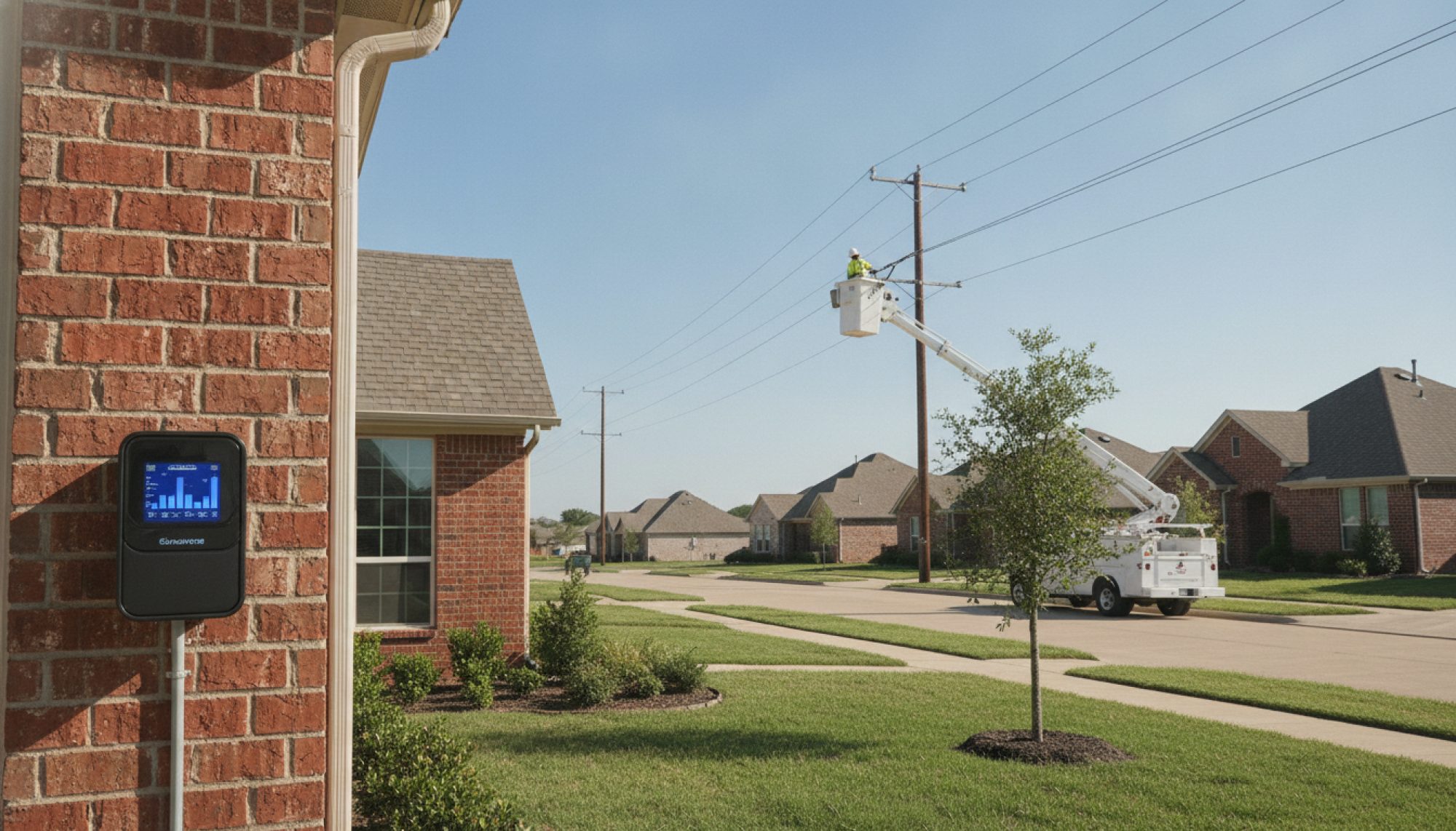
Imagine you just signed up for a reliable 12-month electricity plan with APG&E through ElectricityOne. You are enjoying stable energy supply terms, but during a heavy spring storm, a tree branch knocks down a power line in your neighborhood. As you look out the window, you do not see an APG&E truck pulling up to repair the line. Instead, a bucket truck labeled Oncor or CenterPoint arrives to restore the power. Why are there two different companies handling your electricity, and who is actually responsible for what?
Understanding the Texas Power Dynamic: Retail Electric Providers vs. TDSPs
To navigate the deregulated Texas energy market successfully, you must first understand: what is a transmission and distribution service provider? In Texas, the electricity market is split into two distinct entities: Retail Electric Providers (REPs) and Transmission and Distribution Service Providers (TDSPs, also commonly referred to as TDUs or utilities).
The Role of Your Retail Electric Provider (REP)
Your REP is the company that sells you electricity. They buy power from wholesale generation markets and package it into retail plans for consumers. When you shop for electricity, you choose a REP like APG&E to manage your account, set your contract terms, and handle your monthly billing.
For example, when you enroll in the APG&E SimpleSaver 12 plan, APG&E establishes your fixed energy supply structure for a full 12 months. This gives you predictable energy terms and shields you from wholesale price spikes. However, APG&E does not own the physical power lines or deliver the electricity to your door.
The Role of Your Transmission and Distribution Service Provider (TDSP)
This is where the utility company, or TDSP, comes in. Regardless of which REP you select for your billing, your physical electricity infrastructure is managed by a single, regulated utility company assigned to your geographic region. Your TDSP is responsible for maintaining the physical grid, repairing downed power lines, restoring power after outages, and reading your smart meter.
The Six Major Texas TDSPs and Their Territories
The physical delivery of electricity across the ERCOT grid is divided among six major utility companies. No matter which REP you choose, one of these entities will physically route electricity to your home:
- Oncor: The largest TDSP in Texas, serving Dallas-Fort Worth, Waco, Wichita Falls, and parts of West Texas.
- CenterPoint Energy: Serves the Houston metropolitan area and surrounding Gulf Coast communities.
- AEP Texas Central: Covers southern parts of the state, including Corpus Christi, McAllen, and Laredo.
- AEP Texas North: Manages infrastructure in northern and western regions, including Abilene and San Angelo.
- Texas New-Mexico Power (TNMP): Services scattered pockets across Texas, including areas near Houston, Dallas-Fort Worth, and West Texas.
- Lubbock Power & Light (LP&L): The newest addition to the deregulated market, transitioning Lubbock residents into the competitive ERCOT grid.
How ElectricityOne Simplifies Your Search
Shopping for electricity in Texas can feel overwhelming with so many moving parts. That is why having a trusted partner makes all the difference. At ElectricityOne, we bring over 20 years of experience helping Texas homeowners and businesses find the perfect energy solutions.
Here is how we help you navigate the Texas energy landscape:
- Decades of Experience: With over 20 years of dedicated service, we understand the nuances of every utility region in Texas.
- Meticulous Provider Selection: We partner only with top-tier REPs like APG&E that offer transparent pricing, substantial value, and long-term satisfaction.
- No Hidden Surprises: We clearly explain all costs, ensuring you understand how your REP’s supply rates interact with your regulated TDU pass-through fees.
- Tailored Regional Solutions: We match your exact geographic location with the best available plans designed for your specific TDSP delivery area.
How TDSP Charges Affect Your Monthly Bill
Even though APG&E secures your fixed supply terms through plans like the SimpleSaver 12, your monthly statement will still reflect TDSP delivery charges. These are fully regulated pass-through fees approved by the Public Utility Commission of Texas (PUCT). They cover the cost of maintaining the physical grid and are charged by the utility to the REP, who then passes them directly to you without any markup. Whether you have a traditional fixed-rate plan or a plan utilizing bill credits, these delivery charges will always be part of your total energy cost.
Who to Call in an Emergency
Because your REP and your TDSP have completely different jobs, knowing who to contact during an emergency is critical. If you have a question about your contract, want to update your billing details, or need to renew your APG&E plan, you contact your REP.
However, if your power goes out, you see a sparked transformer, or a tree branch falls onto a power line, you must contact your local TDSP directly. Your REP cannot dispatch emergency crews to fix physical infrastructure. Keeping your specific utility’s emergency number programmed into your phone ensures a faster response when the lights go out.
Understanding the division of labor between your retail provider and your local utility is the key to mastering the Texas energy market. By securing a reliable plan with a premier provider like APG&E, you protect your budget, while your local TDSP keeps the physical grid running safely.
Ready to find the best energy plan for your specific utility delivery area? Call 1.844.567.2863 today to speak with our Texas energy experts.
What is the difference between a REP and a TDSP?
A Retail Electric Provider (REP) like APG&E sells you electricity plans, manages your account, and handles your billing. A Transmission and Distribution Service Provider (TDSP) is the utility company that owns and maintains the physical power lines, poles, and meters, and restores power during outages.
Can I choose my own TDSP in Texas?
No. While you can choose your Retail Electric Provider, your TDSP is determined strictly by your physical geographic location. The local utility infrastructure is a regulated monopoly, meaning only one utility company maintains the lines in any given area.
Why do I see TDSP charges on my APG&E bill?
TDSP delivery charges are standard pass-through fees approved by the Public Utility Commission of Texas. They cover the physical delivery of electricity and grid maintenance. All retail providers list these charges on your bill, passing them directly from the utility to you.