
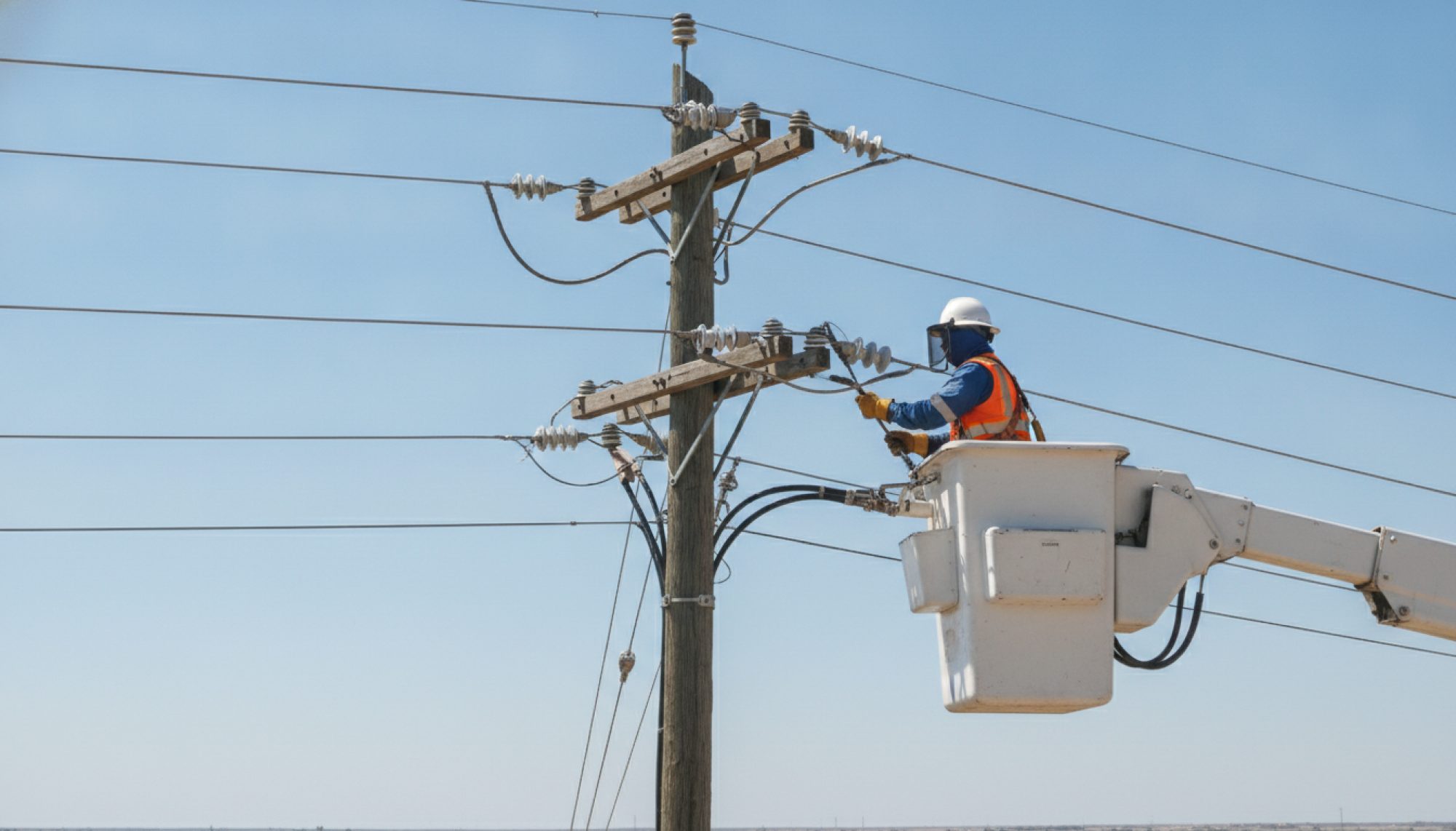
Imagine you have just signed up for a new electricity plan with a reputable provider like APG&E. You have secured a great rate, and you are feeling confident about your monthly energy budget. But a few weeks later, a severe storm rolls through your neighborhood, knocking out the power. As you look out the window, you see a utility truck with Oncor or CenterPoint written on the side working to restore the lines—not APG&E. This common scenario leaves many Texans confused about who exactly is in charge of their electricity. To understand how power gets to your home, you first need to understand what is a transmission and distribution service provider and how they work alongside your chosen retail electric provider.
Retail Electric Providers vs. TDSPs: Who Does What?
In the deregulated Texas energy market, the responsibility of keeping your lights on is split between two distinct entities: Retail Electric Providers (REPs) and Transmission and Distribution Service Providers (TDSPs, also commonly referred to as TDUs). Understanding this division of labor is key to navigating your energy choices with confidence.
The Retail Electric Provider (REP)
The REP is the company you choose to buy your electricity from. REPs like APG&E handle customer service, billing, and the purchasing of wholesale electricity. They design various energy plans, offer fixed-rate contracts, and manage your account. When you shop for APG&E Texas electricity rates, you are shopping for the energy supply itself.
The Transmission and Distribution Service Provider (TDSP)
The TDSP is the utility company that owns and maintains the physical infrastructure—the poles, wires, transformers, and smart meters. No matter which REP you choose to handle your billing, your local TDSP remains the entity responsible for physically routing that electricity to your home meter and responding to physical emergencies like downed power lines or local outages.
The Six Major Texas TDSPs and Their Territories
The Texas power grid, managed by ERCOT, is divided into specific geographic service territories. Every home and business in a deregulated zone is assigned to one of six major utility companies based on location:
- Oncor: The largest TDSP in Texas, serving Dallas-Fort Worth, Waco, Temple, Round Rock, and parts of West Texas.
- CenterPoint Energy: Serving the greater Houston metropolitan area and surrounding coastal regions.
- AEP Texas Central: Covering southern Texas cities, including Corpus Christi, McAllen, Harlingen, and Laredo.
- AEP Texas North: Serving northern and western areas, including Abilene and San Angelo.
- Texas New-Mexico Power (TNMP): Serving various pockets of Texas, including parts of the Gulf Coast, North Texas, and West Texas.
- Lubbock Power & Light (LP&L): The newest addition to the deregulated market, having successfully transitioned its customers into the competitive ERCOT grid.
How APG&E and TDSPs Work Together on Your Bill
When you sign up for an energy plan, your REP and TDSP work in tandem. APG&E focuses on structured bill predictability, which is highly evident in their popular SimpleSaver 12 plan. While APG&E establishes your fixed energy plan terms and supply structure for 12 months, protecting you from wholesale market price spikes, your local TDSP remains responsible for physical delivery.
Your monthly statement will include both your supply charges from APG&E and delivery charges from your TDSP. These delivery charges are regulated pass-through fees approved by the Public Utility Commission of Texas (PUCT). They cover the cost of maintaining the grid and delivering electricity to your home. Because these fees are set by the utility and approved by the state, they are passed directly to you without any markup from your REP, appearing on your bill regardless of whether your plan utilizes bill credits or traditional fixed pricing structures.
Navigating the Texas Grid with ElectricityOne
At ElectricityOne, we have over 20 years of experience helping Texas residents and businesses make sense of the deregulated market. We serve as a prominent platform that connects you with the finest REPs in the state—like APG&E—while educating you on the role of your local utility.
Our meticulous provider selection process guarantees that we only partner with REPs that offer:
- Substantial cost savings and competitive pricing structures.
- Transparent disclosure of all costs and fees, including TDU pass-through charges.
- Long-term satisfaction and reliable customer support.
- Simple, easy-to-understand terms that take the guesswork out of your monthly bill.
Conclusion
Understanding the distinct roles of your REP and your TDSP is the key to mastering your Texas electricity bill. While APG&E manages your energy supply terms and ensures rate stability, your local TDSP keeps the physical infrastructure safe and operational. Knowing who does what helps you read your bill better and ensures you know exactly who to call when the lights go out.
Ready to find the best energy plan for your specific utility delivery area? Call 1.844.567.2863 today to speak with our Texas energy experts.
Frequently Asked Questions
What is the difference between a REP and a TDSP?
A Retail Electric Provider (REP) sells you the electricity and manages your billing and plans. A Transmission and Distribution Service Provider (TDSP) is the utility company that maintains the physical grid, poles, and wires, and delivers that electricity to your home.
Can I choose my TDSP in Texas?
No. While you can choose your Retail Electric Provider (REP), your TDSP is determined solely by your physical geographic location. You cannot switch utility companies, as they own the physical infrastructure in your specific area.
Who do I call if my power goes out?
In the event of a power outage or downed power line, you should contact your local TDSP (such as Oncor, CenterPoint, or AEP), not your REP. The TDSP is responsible for physical repairs and restoring power to your neighborhood.