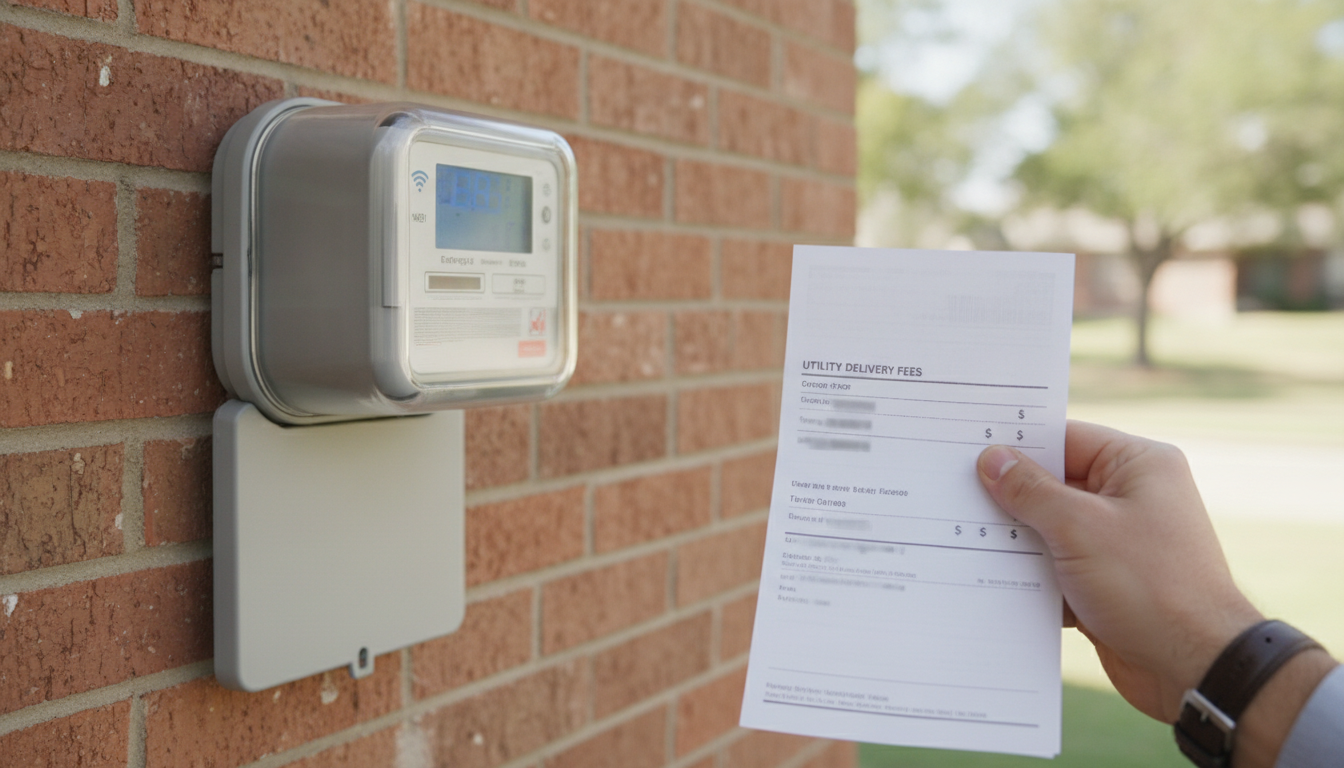

Opening a monthly Texas electricity bill can feel like deciphering a complex code. Between the energy charge, base fees, and various line items, many Texas homeowners and renters find themselves wondering why their final balance doesn’t match their expected usage. In the deregulated Texas energy market, your bill is actually split between two entirely different entities: the company that sells you the electricity and the utility that physically delivers it to your home. Understanding this distinction is the key to mastering your monthly energy budget.
The Great Texas Energy Divide: REPs vs. TDUs
To understand your bill, you must first understand the two players behind your electricity service. The first is your Retail Electric Provider (REP). This is the company you actively shop for and choose to supply your power. Your REP handles your customer service, manages your billing, and purchases wholesale energy on your behalf.
The second entity is your Transmission and Distribution Utility (TDU), sometimes called a TDSP. Your TDU is the regional utility company that owns and maintains the physical infrastructure—the power lines, poles, transformers, and meters. Unlike your REP, you do not get to choose your TDU; it is determined strictly by your geographic location. In Texas, the major TDUs are Oncor, CenterPoint Energy, AEP Texas, and Texas-New Mexico Power (TNMP).
Spotting the Core Differences on Your Monthly Statement
When you look at your monthly statement, the charges are split to reflect these two separate services. The supply portion represents the actual electricity you consumed, billed at the contract rate you agreed to with your REP. This charge scales directly with your overall kilowatt-hour consumption.
The delivery portion, however, goes directly to your local utility company to cover the cost of maintaining the power grid, reading your meter, and responding to emergency outages. When it comes to managing your monthly budget, understanding tdu delivery charges on electric bill statements is the single best way to avoid surprise costs, as these state-regulated fees are passed directly to you without any markup from your retail provider.
How TDUs Pass Down Regulated Costs
TDU delivery charges consist of a fixed monthly customer charge and a variable charge per kilowatt-hour. These rates are approved and regulated by the Public Utility Commission of Texas (PUCT) and change twice a year to account for grid maintenance and storm recovery costs. Because these are pass-through charges, every consumer in a specific utility territory pays the exact same TDU rates, regardless of which retail provider they choose for their energy supply.
Why Partnering with the Right Provider Matters
Navigating these different charges can be overwhelming, but you don’t have to do it alone. ElectricityOne acts as your trusted partner, helping you cut through the confusion to find the most transparent plans on the market. We leverage our extensive experience to connect Texas residents and businesses with premier Retail Electric Providers that prioritize clarity and honesty.
- Over 20 Years of Texas Expertise: Providing reliable, quick, and courteous electric service connections for Texas homes and businesses.
- Strict Vetting of Honest Contract Terms: We partner only with top-tier REPs that offer transparent pricing and no hidden fee traps.
- A Commitment to Transparent Billing: Helping you understand exactly what you are paying for, from supply charges to regulated utility fees.
Protecting Yourself from Billing Surprises
By learning to distinguish between what you pay your REP for supply and what you pay your TDU for delivery, you gain complete control over your utility expenses. You can easily spot if a sudden bill increase is due to your personal energy habits, a seasonal rate adjustment from the utility, or a change in your retail contract terms. This knowledge empowers you to shop smarter and select plans that align perfectly with your household’s needs.
Ready to switch to a transparent plan with no billing surprises? Call 1.844.567.2863 today to speak with our Texas energy billing experts.
Frequently Asked Questions
Can I choose a different TDU to lower my delivery charges?
No. TDUs are determined solely by your geographic location. Since they own and maintain the physical poles and wires in your specific area, you cannot change your TDU, and their regulated delivery charges remain the same regardless of your retail provider.
Why do TDU delivery charges change twice a year?
The Public Utility Commission of Texas (PUCT) allows TDUs to adjust their rates twice a year (typically in March and September) to cover the costs of grid updates, infrastructure maintenance, and emergency storm restorations.
What is the difference between a base fee and a TDU charge?
A base fee is a fixed monthly administrative fee charged by some Retail Electric Providers (REPs) for managing your account. A TDU charge is a separate, regulated fee collected by your utility provider for delivering the physical electricity to your home.