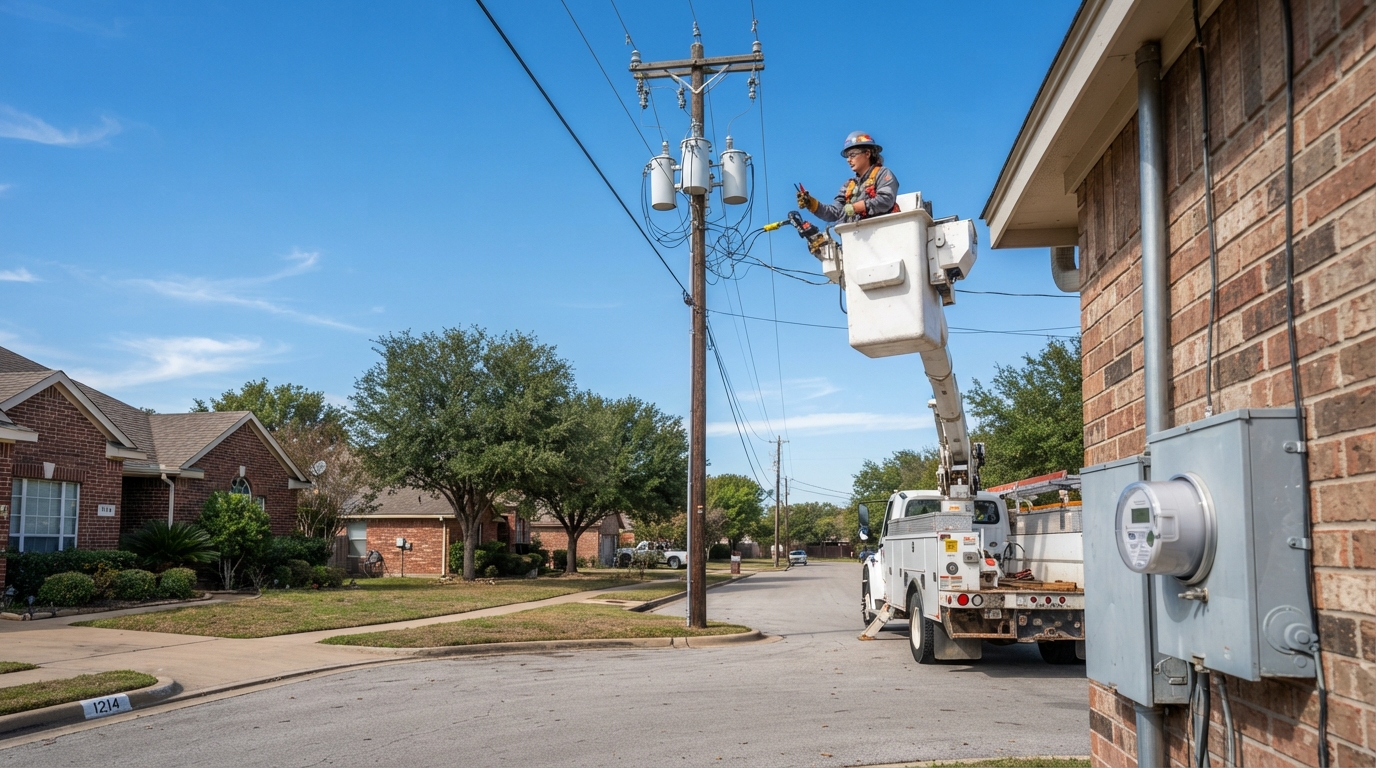
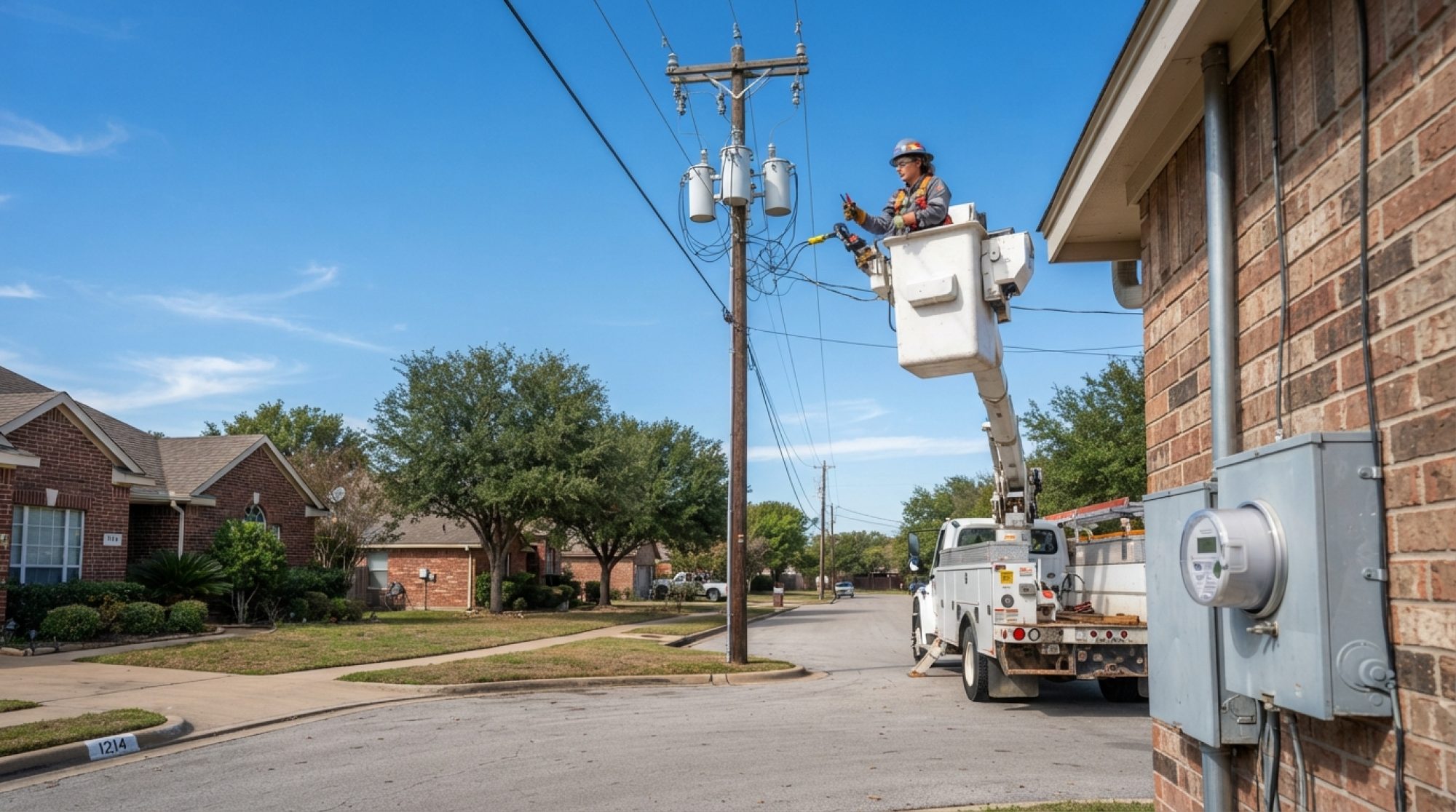
When you sign up for a 12-month fixed energy plan with a trusted company like APG&E through ElectricityOne, you might wonder why an Oncor or CenterPoint Energy bucket truck is parked down the street maintaining the power lines. It is a common point of confusion for Texas residents and business owners navigating the state’s deregulated energy market. Seeing two different corporate names associated with your electric service can raise questions about who is actually powering your home, who issues your bill, and who you should contact during a storm outage.
Provider vs. Utility: Demystifying the Texas Deregulated Market
To fully grasp how electricity reaches your property, it helps to understand what is a transmission and distribution service provider and how it differs from a Retail Electric Provider (REP). In deregulated regions across the Lone Star State, the electricity market is divided into two distinct roles: supply and delivery.
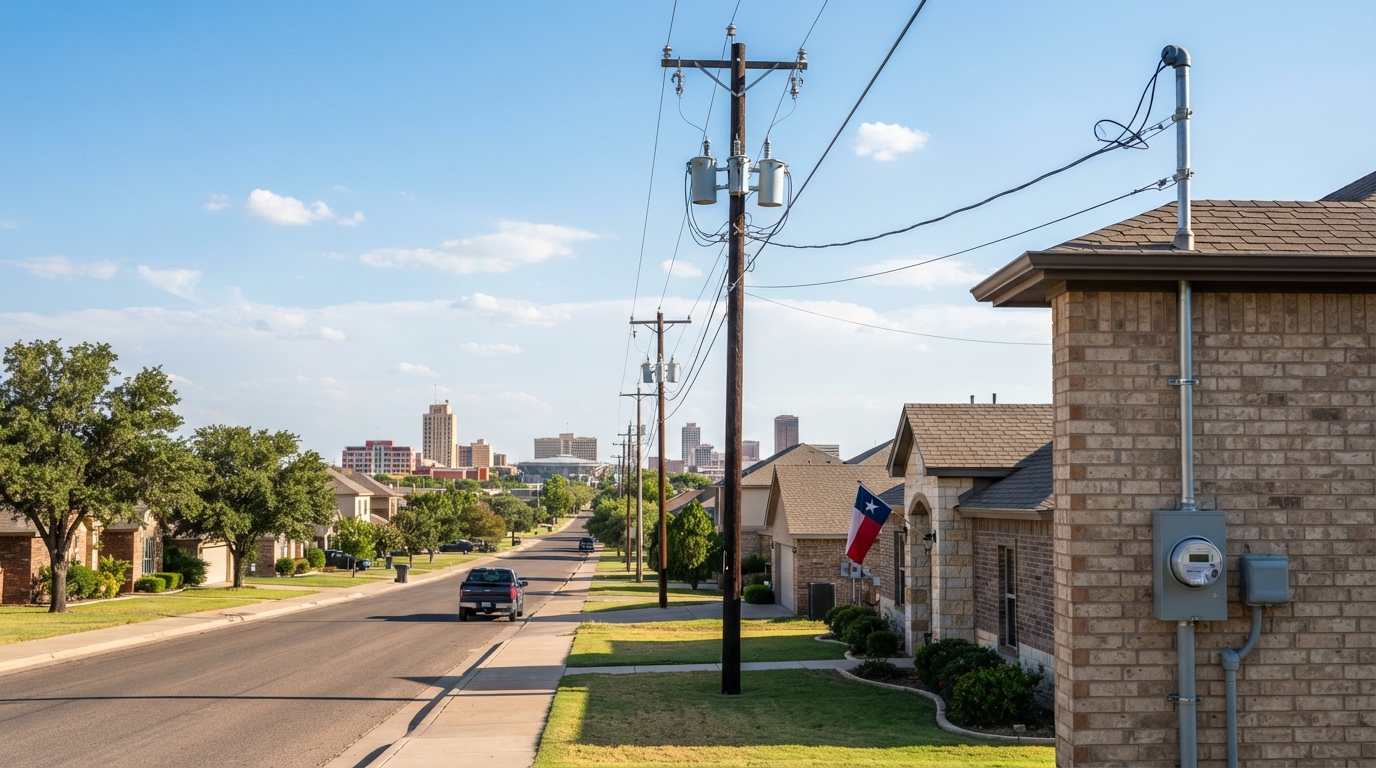
Your Retail Electric Provider (REP) is the commercial company you choose to handle your electricity account. They purchase wholesale energy, design retail rate plans, manage your billing, and provide customer support. On the other side of the equation sits the Transmission and Distribution Service Provider (TDSP)—often referred to as the TDU or utility company. Your TDSP is a state-regulated entity responsible for maintaining physical energy infrastructure, including utility poles, high-voltage wires, transformers, and digital smart meters.
The Role of Your Selected Provider: APG&E and Bill Predictability
While your local utility owns and maintains the physical grid equipment in your area, you retain full freedom to select which retail provider sells you electricity. Top-tier providers like APG&E offer tailored retail options designed to give homeowners structural financial confidence. For instance, enrollment in the APG&E SimpleSaver 12 plan allows customers to lock in supply pricing terms for a full year.
Under this arrangement, APG&E establishes your fixed energy supply structure, insulating your household budget from the volatile swings of wholesale market fluctuations. However, the physical delivery of that electricity from the power plant to your home remains the responsibility of your regional TDSP. The utility charges regulated delivery fees for using their poles and wires, which your REP collects on their behalf and seamlessly passes through onto your unified monthly billing statement.
The Six Major Texas TDSPs Servicing the ERCOT Grid
Your physical location strictly determines your assigned utility company, regardless of whether you are shopping for standard residential service, traditional home power, or specialized business electricity plans. The six primary regulated utility territories operating within the ERCOT grid include:
- Oncor Electric Delivery: Serves the largest territory in Texas, including those searching for residential electricity dallas options and widespread North Texas communities.
- CenterPoint Energy: Manages the delivery infrastructure for millions of customers requiring reliable electricity Houston services and surrounding Gulf Coast regions.
- AEP Texas Central & AEP Texas North: Covers vast regional stretches across South Texas, Central corridors, and West Texas service territories.
- Texas-New Mexico Power (TNMP): Maintains infrastructure across distinct patches of North, West, and Gulf Coast Texas.
- Lubbock Power & Light (LP&L): The newest addition to the competitive deregulated landscape, allowing Lubbock residents to transition from a municipal monopoly into the open market.
Why Shopping with ElectricityOne Simplifies Texas Energy
Navigating the options beyond basic platforms like the state’s public comparison site power to choose can sometimes feel overwhelming. That is where ElectricityOne brings clarity and consumer confidence to your decision-making process.
- Over 20 years of experience providing reliable, quick, and courteous electric service for Texas homes and businesses.
- A prominent platform connecting residents and businesses with the finest Retail Electric Providers across all six major utility zones.
- A meticulous provider selection process ensuring partnerships only with REPs—like APG&E—that offer substantial cost savings and long-term satisfaction.
- Transparent disclosure of all underlying contract terms, including fixed energy charges and mandatory utility pass-through delivery fees.
- Flexible options tailored to every customer situation, including standard fixed-rate contracts and options for those interested in flexible prepaid electric service structures.
Who Handles What When Power Issues Arise?
Understanding the division between your REP and your TDSP saves critical time during emergencies. If you have questions about your billing structure, want to update your contact info, or need to renew your APG&E plan, you will contact your REP’s customer care team. However, if a severe storm downs a power line in your yard, or your entire neighborhood loses power, you should contact your assigned TDSP emergency hotline immediately. Because the utility owns the wires, their emergency dispatch teams are the only ones equipped to send line crews and restore physical service.
Ready to find the best energy plan for your specific utility delivery area? Call 1.844.567.2863 today to speak with our Texas energy experts.
Frequently Asked Questions
### Can I choose my own TDSP utility company in Texas?
No. While you can choose your Retail Electric Provider (REP) like APG&E, your TDSP is determined strictly by the geographic location of your home or business. The physical infrastructure in your neighborhood belongs to one assigned utility company.
### Why do utility delivery charges appear on my electric bill?
TDSP delivery charges cover the cost of maintaining power lines, repairing emergency storm damage, reading smart meters, and operating the electrical grid. These regulated pass-through fees are assessed by your utility and collected by your provider on your monthly statement.
### Does changing my retail provider interrupt my electrical supply?
No. Because your local TDSP continues to maintain the physical power lines and supply infrastructure without interruption, switching to a new retail provider like APG&E is a seamless administrative transition with zero loss of electricity service.