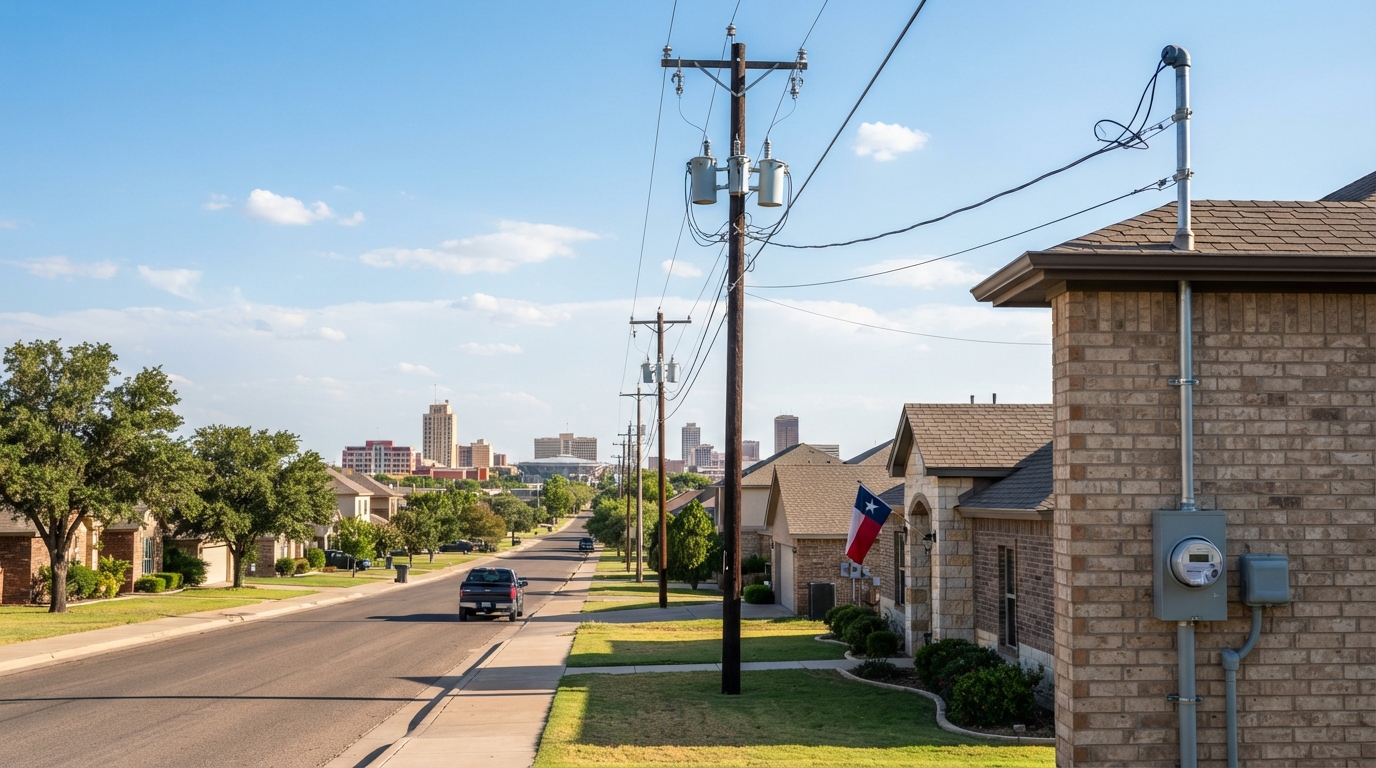
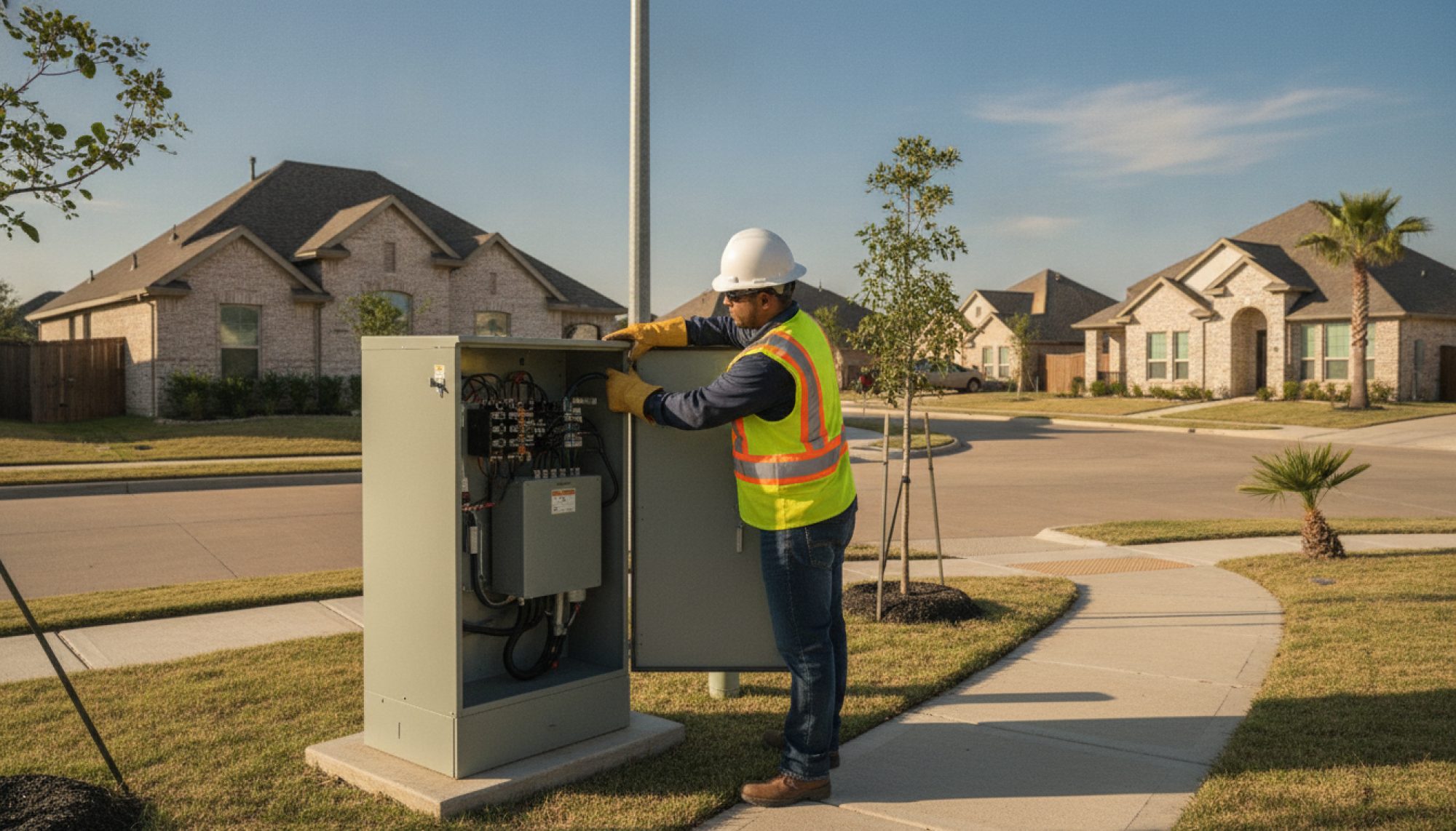
Imagine you just signed up for a 12-month contract with APG&E through ElectricityOne. You are enjoying stable bills and peace of mind, but then a massive storm rolls through and a tree branch knocks down a power line in your neighborhood. When you look out the window, the truck that pulls up to fix the line does not say APG&E on the side—it says Oncor or CenterPoint. Why are there two different companies handling your electricity, and how do they work together to keep your lights on?
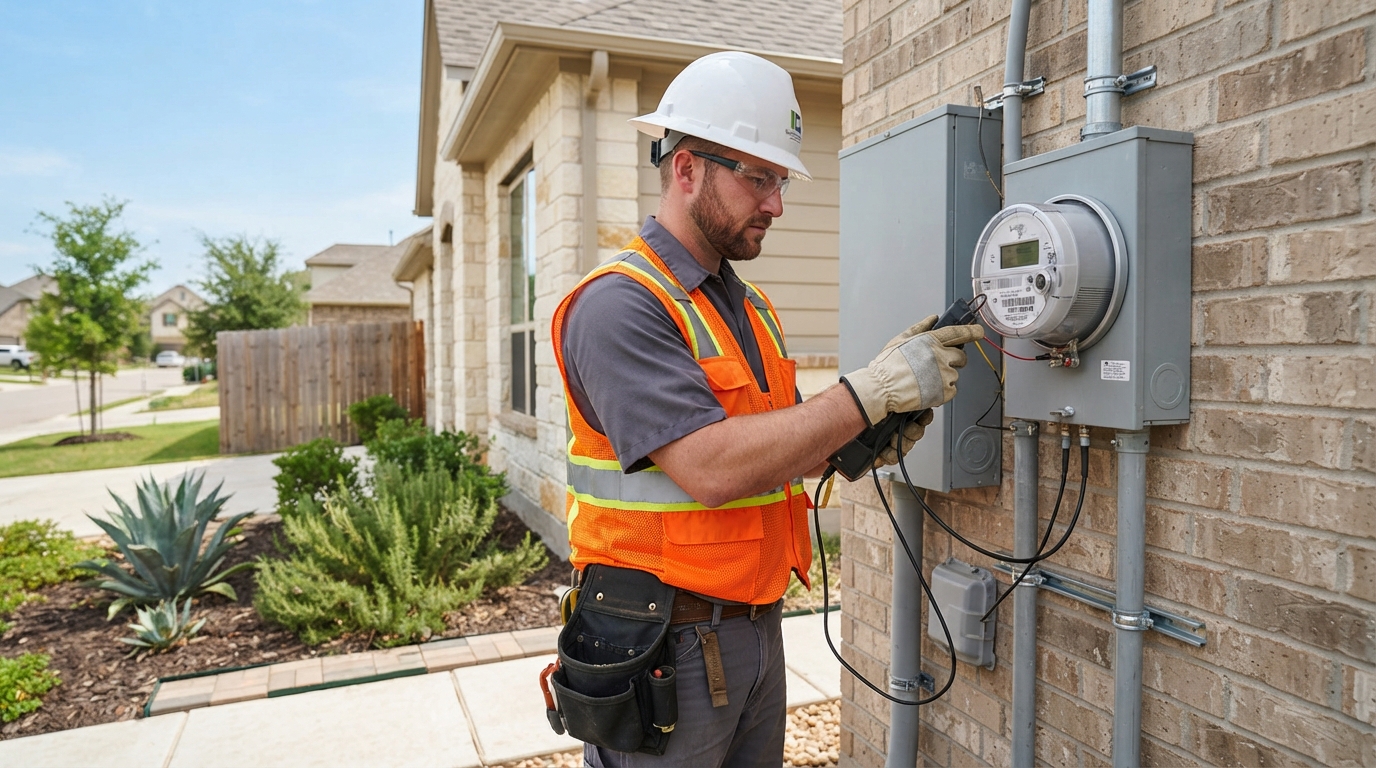
To make sense of this setup, it helps to understand what is a transmission and distribution service provider (TDSP). In the deregulated Texas energy market, your service is split into two distinct parts: the company that sells you electricity and the company that physically delivers it. Your Retail Electric Provider (REP), such as APG&E, manages your account, sets your supply rate, and bills you. Meanwhile, your TDSP (often called a TDU or utility company) owns the physical infrastructure—the poles, wires, transformers, and smart meters—that delivers that electricity to your home.
Retail Electric Providers vs. TDSPs: Who Does What?
In Texas, the separation of power supply and power delivery ensures a competitive marketplace where consumers have the freedom to choose their energy plans. Whether you are shopping for electricity Houston residents rely on, or comparing options for electricity dallas neighborhoods use, you will interact with both types of companies.
While some consumers prefer a traditional fixed-rate contract, others might seek out a prepaid electric service for maximum flexibility. Companies like APG&E offer structured stability, while platforms like ElectricityOne help you compare these choices rather than navigating the overwhelming options on the state’s power to choose portal alone. Commercial customers also benefit from tailored business electricity plans designed to handle high-demand operations.
A premier example of a Texas REP is APG&E. Known for their focus on structured bill predictability, APG&E offers plans like the SimpleSaver 12 plan. When you enroll in this plan, APG&E establishes your fixed energy plan terms and supply structure for 12 months, ensuring your cost per kilowatt-hour remains stable. However, your local TDSP remains the entity responsible for physically routing that electricity to your home meter, maintaining the wires, and reading your meter each month.
The Geography of the Texas Grid: The Six Major TDSP Territories
Your geographic location determines your TDSP; you cannot choose your utility company. The ERCOT grid is divided into distinct service territories managed by six major utility companies. Here is how they break down across the state:
Oncor Electric Delivery
As the largest TDSP in Texas, Oncor services millions of customers across the Dallas-Fort Worth metroplex, West Texas, and parts of Central Texas. They maintain the vast network of transmission lines that keep these rapidly growing regions powered.
CenterPoint Energy
CenterPoint manages the transmission and distribution infrastructure for the greater Houston metropolitan area and surrounding Gulf Coast communities. They are highly experienced in handling coastal weather challenges to maintain grid resilience.
AEP Texas Central & AEP Texas North
AEP Texas is divided into two main territories. AEP Central covers South Texas, including cities like Corpus Christi, McAllen, and Laredo. AEP North services parts of West Texas and the Texas Panhandle, including Abilene and San Angelo. Both divisions ensure reliable power delivery to vast, diverse geographic regions.
Texas New-Mexico Power (TNMP)
TNMP operates in scattered pockets across Texas, including areas just outside of Houston, parts of North Texas, and portions of West Texas. They provide crucial utility services to many smaller communities and rural areas.
Lubbock Power & Light (LP&L)
Lubbock Power & Light is the newest addition to the deregulated Texas marketplace. Having recently transitioned into the competitive ERCOT grid, LP&L now operates as a traditional TDSP, allowing Lubbock residents to choose their REPs while LP&L continues to maintain the local physical infrastructure.
Why ElectricityOne is Your Trusted Texas Energy Partner
Navigating the relationship between REPs and TDSPs can be complex, but ElectricityOne simplifies the entire shopping experience. With a commitment to transparency and customer satisfaction, ElectricityOne helps you find the perfect match for your home or business.
- Over 20 years of dedicated experience providing reliable, quick, and courteous electric service for Texas homes and businesses.
- A meticulous provider selection process that partners only with top-tier REPs like APG&E to ensure long-term satisfaction.
- Transparent disclosure of all costs and fees, including TDU pass-through charges, to eliminate billing surprises.
- An expert team ready to help you navigate the unique utility delivery boundaries of your specific zip code.
Navigating Your Texas Energy Bill with Confidence
Understanding the role of your TDSP helps demystify your monthly statement. Even when you secure competitive APG&E Texas electricity rates, your bill will still include regulated distribution charges from your local utility. These pass-through fees are set and regulated by the Public Utility Commission of Texas (PUCT) and are passed directly to your TDSP to support grid maintenance and emergency storm response.
By knowing the difference between your provider and your utility, you will always know who to contact. For billing questions or plan renewals, you contact APG&E. For power outages, flickering lights, or downed lines, you contact your local TDSP immediately.
Ready to find the best energy plan for your specific utility delivery area? Call 1.844.567.2863 today to speak with our Texas energy experts.
Frequently Asked Questions
### What is the difference between an REP and a TDSP?
A Retail Electric Provider (REP) like APG&E sells you electricity, manages your billing, and designs your rate plans. A Transmission and Distribution Service Provider (TDSP) owns and maintains the physical grid infrastructure, including the power lines, poles, and meters, and delivers the electricity to your property.
### How do TDSP delivery charges affect my monthly electric bill?
TDSP charges are recurring, regulated fees passed through to the consumer to pay for grid maintenance, meter reading, and emergency repairs. These charges appear on your monthly statement as a combination of a fixed monthly utility fee and a cost per kilowatt-hour, regardless of which REP or supply plan you choose.
### Who should I call if my power goes out or a line is down?
You should always contact your local TDSP (such as Oncor, CenterPoint, or AEP) during a power outage or emergency. Because they own and maintain the physical electrical infrastructure, they are the only entities equipped to dispatch crews and safely restore your power.