
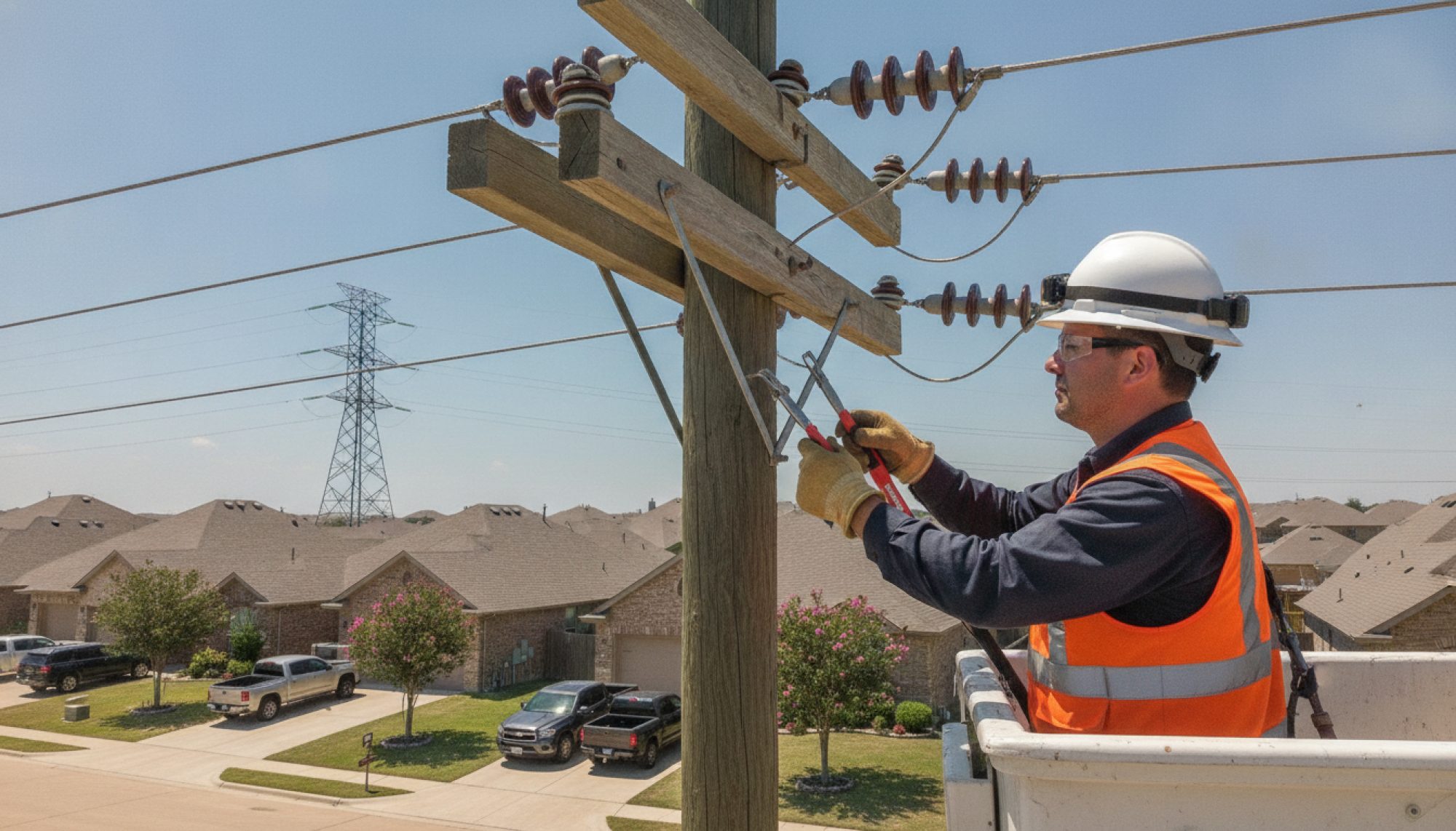
Picture this: you just signed up for a stable, long-term electricity plan with Frontier Utilities through ElectricityOne. You are thrilled to have secured your energy supply rate and look forward to predictable monthly bills. But a few weeks later, a sudden Texas storm rolls through, and you spot an Oncor or CenterPoint utility truck working on the power lines down your street. Or perhaps you open your first monthly statement and see charges from a company you didn’t choose. If you’ve ever wondered why two different entities are involved in keeping your lights on, you are not alone.
To truly master your electricity bill and make informed decisions for your household, you first need to understand what is a transmission and distribution service provider (TDSP) and how they work alongside your chosen retail electricity provider. Let’s break down the clear distinction between the companies that supply your power and the utilities that deliver it.
Provider vs. Utility: Explaining the Clear Distinction
In the deregulated Texas energy market, the responsibility of powering your home is split between two distinct entities: your Retail Electric Provider (REP) and your Transmission and Distribution Service Provider (TDSP, also known as a TDU).
Your Retail Electric Provider (REP)
Your REP is the company you choose to buy your electricity from. They act as the customer-facing retailer. They buy electricity from power generators, package it into various plans, manage your billing account, and provide customer service. When you shop for an energy plan on a platform like ElectricityOne, you are choosing a REP.
Your Transmission and Distribution Service Provider (TDSP)
Your TDSP is the local utility company that physically delivers the electricity to your home. They own and maintain the physical infrastructure of the grid—including the high-voltage transmission lines, local poles, wires, transformers, and smart meters. Unlike REPs, you cannot choose your TDSP; they are determined solely by your physical geographic location.
Meet the Six Major Texas TDSPs
The Electric Reliability Council of Texas (ERCOT) grid is divided into distinct utility service territories. Depending on where you live in Texas, one of these six major utilities maintains the local infrastructure:
- Oncor: The largest TDSP in Texas, serving Dallas-Fort Worth, Waco, Wichita Falls, and parts of West Texas.
- CenterPoint Energy: Serves the greater Houston metropolitan area and surrounding communities.
- AEP Texas Central: Covers southern Texas, including cities like Corpus Christi, McAllen, and Laredo.
- AEP Texas North: Services northern and western parts of the state, including Abilene and San Angelo.
- Texas New-Mexico Power (TNMP): Covers various pockets of Texas, including portions of the Gulf Coast, North Texas, and West Texas.
- Lubbock Power & Light (LP&L): The newest addition to the competitive market, having recently transitioned its customers into the deregulated ERCOT grid.
Securing Long-Term Stability with Frontier Utilities
While your local TDSP is responsible for the physical delivery of power, choosing the right REP is essential for managing your monthly supply costs. Frontier Utilities is a premier example of a Texas retail provider that helps homeowners combat market volatility. By selecting a stable, long-term option like the Frontier Saver Premier 24 plan, you can secure your energy supply rate for a full 24 months.
It is important to remember how these roles interact. While Frontier Utilities secures your energy supply rate for two years, your local TDSP is still the entity delivering that power across the local lines. The delivery charges from your utility are regulated by the Public Utility Commission of Texas (PUCT) and are passed through to your bill. These delivery charges cover the cost of maintaining the grid and will appear on your statement regardless of which retail plan you choose.
Why Shop for Energy Through ElectricityOne?
Navigating the relationship between utilities and retail providers can feel overwhelming, but ElectricityOne simplifies the entire process. With a commitment to transparency and customer satisfaction, ElectricityOne helps you find the perfect match for your home’s unique energy footprint.
- Over 20 Years of Experience: Providing reliable, quick, and courteous electric service for Texas homes and businesses.
- Meticulous Provider Selection: We only partner with top-tier REPs—like Frontier Utilities—that offer substantial cost savings and long-term satisfaction.
- Transparent Cost Disclosure: We clearly outline all costs, including TDU pass-through charges, so there are never any surprises on your monthly statement.
- Simplified Shopping: Easily compare plans across all six major TDSP utility delivery zones in Texas.
Who to Call When the Lights Go Out
Understanding the difference between your provider and your utility is especially critical during an emergency. If your power goes out, a tree limb falls on a power line, or you notice a damaged smart meter, do not call Frontier Utilities or your retail provider. Because REPs do not own or service the physical equipment, they cannot restore your power.
Instead, you must contact your local TDSP directly. Your utility has dedicated emergency crews standby 24/7 to handle power outages, downed lines, and hazardous grid situations. Keeping your specific TDSP’s emergency phone number saved in your contacts ensures you get help as quickly as possible during a storm.
Conclusion
By understanding the distinct roles of your retail provider and your local utility, you can shop for electricity with confidence, accurately read your monthly statement, and know exactly who to contact in a power emergency. You can secure a stable energy supply rate with a trusted provider while relying on your local TDSP to keep the physical infrastructure running smoothly.
Ready to find the best energy plan for your specific utility delivery area? Call 1.844.567.2863 today to speak with our Texas energy experts.
Frequently Asked Questions
Can I choose a different utility company to deliver my electricity?
No. While you have the freedom to choose your Retail Electric Provider (REP), you cannot choose your Transmission and Distribution Service Provider (TDSP). Your utility is determined strictly by the geographic location of your home or business.
Are TDSP delivery charges the same for every retail provider?
Yes. TDSP delivery charges are regulated by the Public Utility Commission of Texas (PUCT) and are standard for all consumers within that utility’s geographic territory, regardless of which retail provider or plan you choose.
What is the difference between a fixed supply rate and delivery charges?
A fixed supply rate is the cost per kilowatt-hour you agree to pay your retail provider (like Frontier Utilities) for the electricity you consume. Delivery charges are separate, regulated fees charged by your local TDSP to cover the cost of transporting that electricity over the physical grid to your home.