
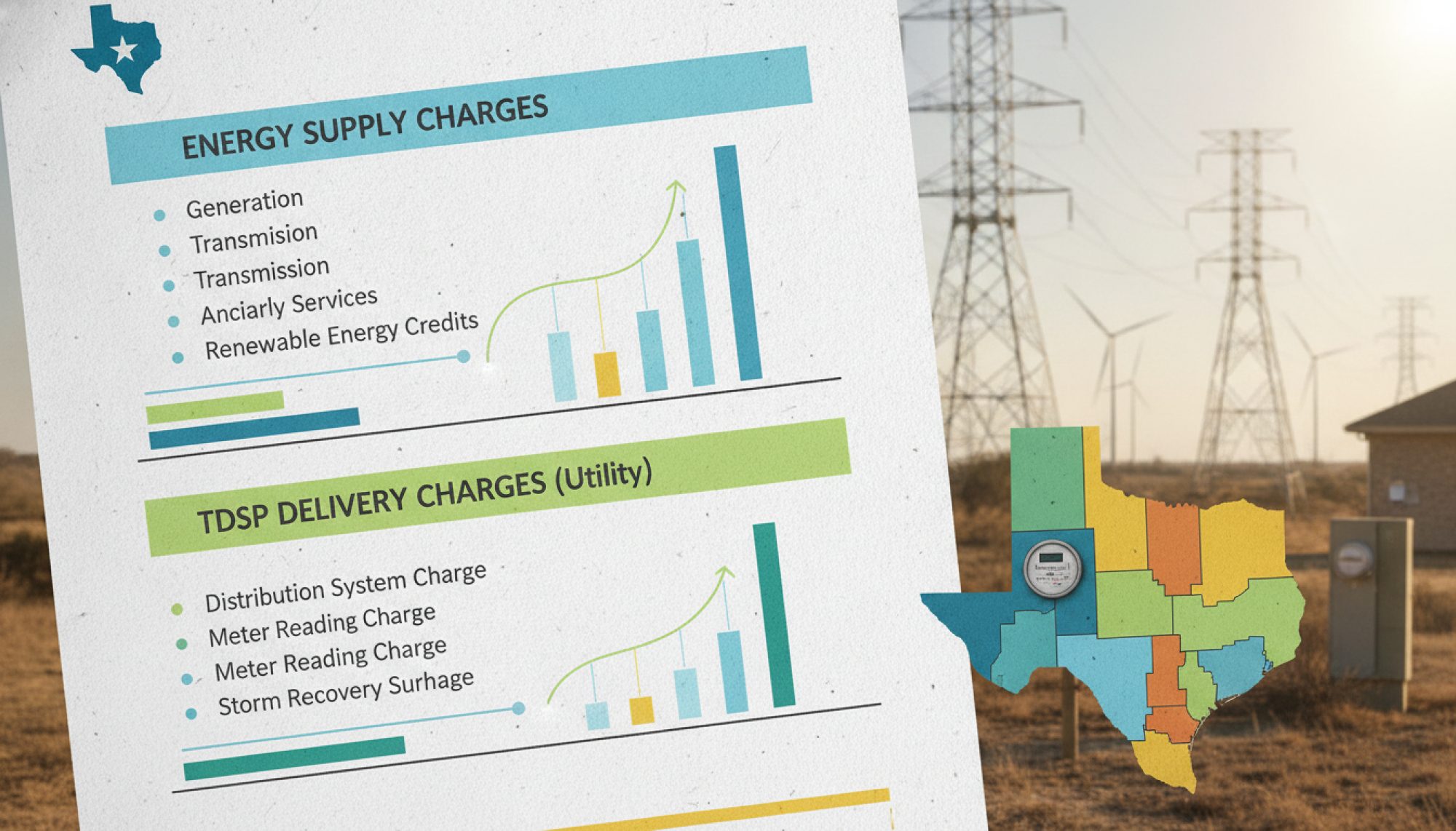
Ever wonder why your electricity bill shows charges from a company you didn’t choose, even after securing a great fixed-rate plan with a provider like APG&E Texas electricity rates? You’re not alone. This common point of confusion stems from the unique structure of Texas’s deregulated energy market, where two distinct entities work in tandem to power your home: your Retail Electric Provider (REP) and your Transmission and Distribution Service Provider (TDSP), often called a Utility or TDU. Today, we’re demystifying these essential pass-through fees, shedding light on why they appear on your monthly statement regardless of your energy plan’s structure.
The Dual Nature of Your Texas Electricity Bill
In Texas, the company you choose, like APG&E, sells you the actual electricity and manages your energy plan, including your chosen supply structure for your 12-month term with their popular SimpleSaver 12 plan. They handle your billing, customer service for your energy supply, and innovative pricing options. However, the physical infrastructure that delivers that power—the poles, wires, substations, and smart meters—is owned and maintained by your local TDSP. These TDSPs operate across specific service territories, ensuring reliable power delivery to every home and business within their region.
Who Are the Texas TDSPs?
The Lone Star State is served by six major Transmission and Distribution Service Providers:
- Oncor: Serving much of North and Central Texas, including Dallas and Fort Worth.
- CenterPoint Energy: Primarily serving the Houston metropolitan area and surrounding regions.
- AEP Texas North: Covering parts of West Texas and the Panhandle.
- AEP Texas Central: Serving South Texas, including Corpus Christi and Victoria.
- Texas New-Mexico Power (TNMP): Operating in various scattered communities across Texas.
- Lubbock Power & Light (LP&L): The newest entrant to the competitive market, serving the Lubbock area.
These are the companies responsible for maintaining the grid, restoring power during outages, and reading your meter. Your choice of REP, such as APG&E, doesn’t change which TDSP serves your specific address; that’s determined by your geographical location.
Understanding Regulated TDSP Delivery Charges
The fees charged by these TDSPs are known as texas tdsp delivery charges explained, and they are a fundamental part of your electricity bill. These aren’t hidden fees; they are regulated by the Public Utility Commission of Texas (PUCT) to ensure fairness and transparency. The PUCT approves the rates TDSPs can charge for the use and maintenance of their infrastructure, which includes the significant costs associated with building, upgrading, and repairing the vast network that brings electricity to your door.
These charges typically consist of a fixed monthly customer charge and a variable charge based on your kilowatt-hour (kWh) usage. Crucially, these charges are passed through directly from the TDSP to your REP, and then from your REP to you, the customer. This means that whether your plan utilizes bill credits, traditional fixed pricing structures, or a variable rate, these TDSP delivery charges will appear on your monthly statement. They are separate from the energy supply charges set by your REP, APG&E, for instance. APG&E establishes your fixed energy plan terms and supply structure for 12 months, but your local TDSP remains the entity responsible for physically routing that electricity to your home meter.
ElectricityOne has over 20 years of experience providing reliable, quick, and courteous electric service for Texas homes and businesses. We simplify the complex Texas energy market by:
- Connecting residents and businesses with premier Retail Electric Providers (REPs) like APG&E.
- Ensuring our partners offer substantial cost savings and transparent disclosure of all costs and fees.
- Educating consumers on the vital role of their local utility across all six major TDSP zones.
Why These Charges Matter to You
Understanding TDSP delivery charges is key to fully comprehending your electricity bill. Knowing that these are regulated, non-negotiable fees for infrastructure use helps you differentiate between the supply charges from your REP (which you can influence by choosing a different plan or provider) and the delivery charges from your TDSP (which are consistent regardless of your REP). Furthermore, this distinction is critical during power outages or emergencies; you should always contact your local TDSP, not your REP, when the lights go out or if you spot a downed power line.
At ElectricityOne, we believe in empowering Texans with knowledge. We meticulously vet our partner REPs, like APG&E, to ensure they offer not only competitive plans but also clear and transparent disclosure of all costs, including these essential TDSP pass-through charges, fostering long-term satisfaction. Ready to find the best energy plan for your specific utility delivery area? Call 1.844.567.2863 today to speak with our Texas energy experts.
Frequently Asked Questions About TDSP Delivery Charges
Why do TDSP charges appear on my bill even with a fixed-rate plan from my REP?
TDSP charges are separate from your REP’s energy supply charges. They cover the cost of maintaining the poles, wires, and meters that physically deliver electricity to your home, regardless of which company sells you the power. They are regulated fees that all customers must pay.
Can I avoid paying TDSP delivery charges?
No, these charges are mandatory for all customers in deregulated areas of Texas. They are essential for funding the infrastructure that provides reliable electricity to your home and are regulated by the Public Utility Commission of Texas.
Who regulates these TDSP delivery charges?
The Public Utility Commission of Texas (PUCT) is responsible for regulating and approving the rates that Transmission and Distribution Service Providers (TDSPs) charge for their services, ensuring they are fair and cover the costs of maintaining the electric grid.