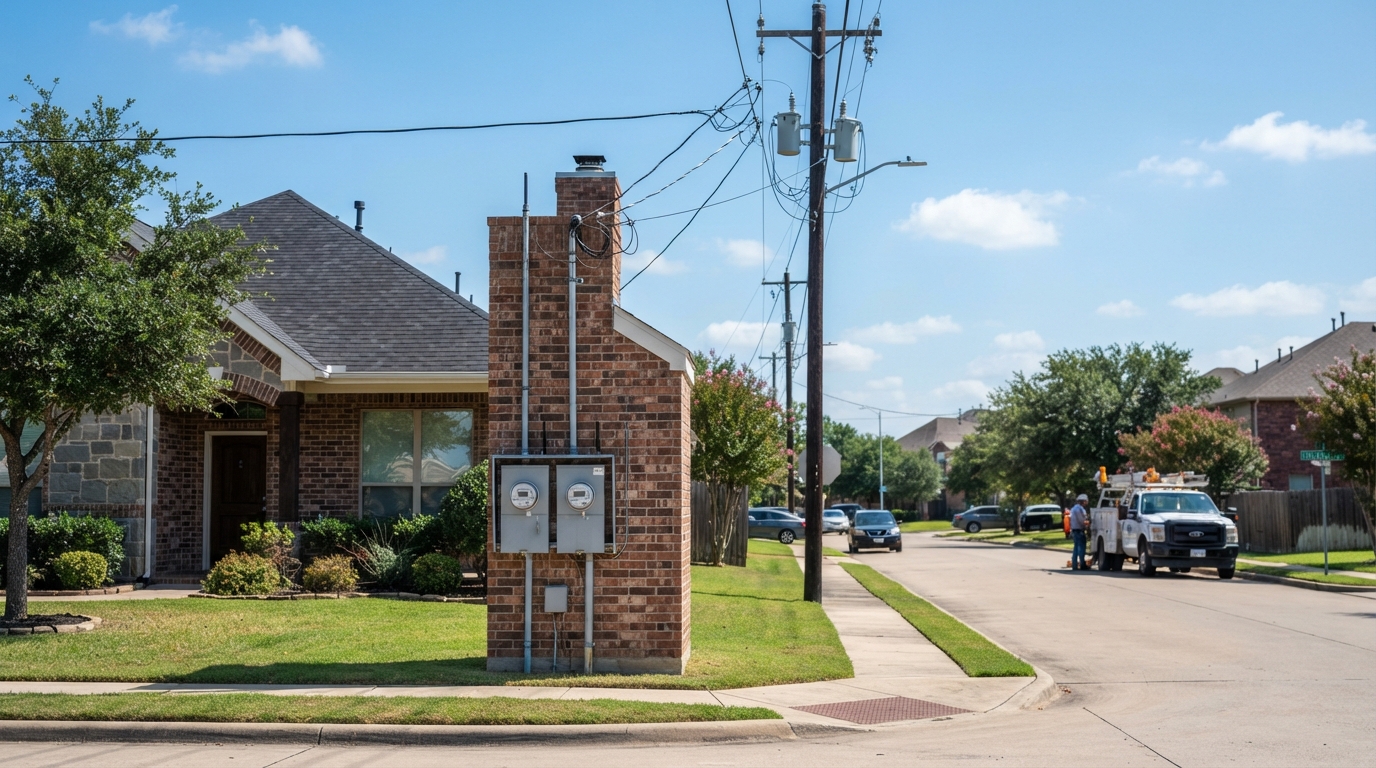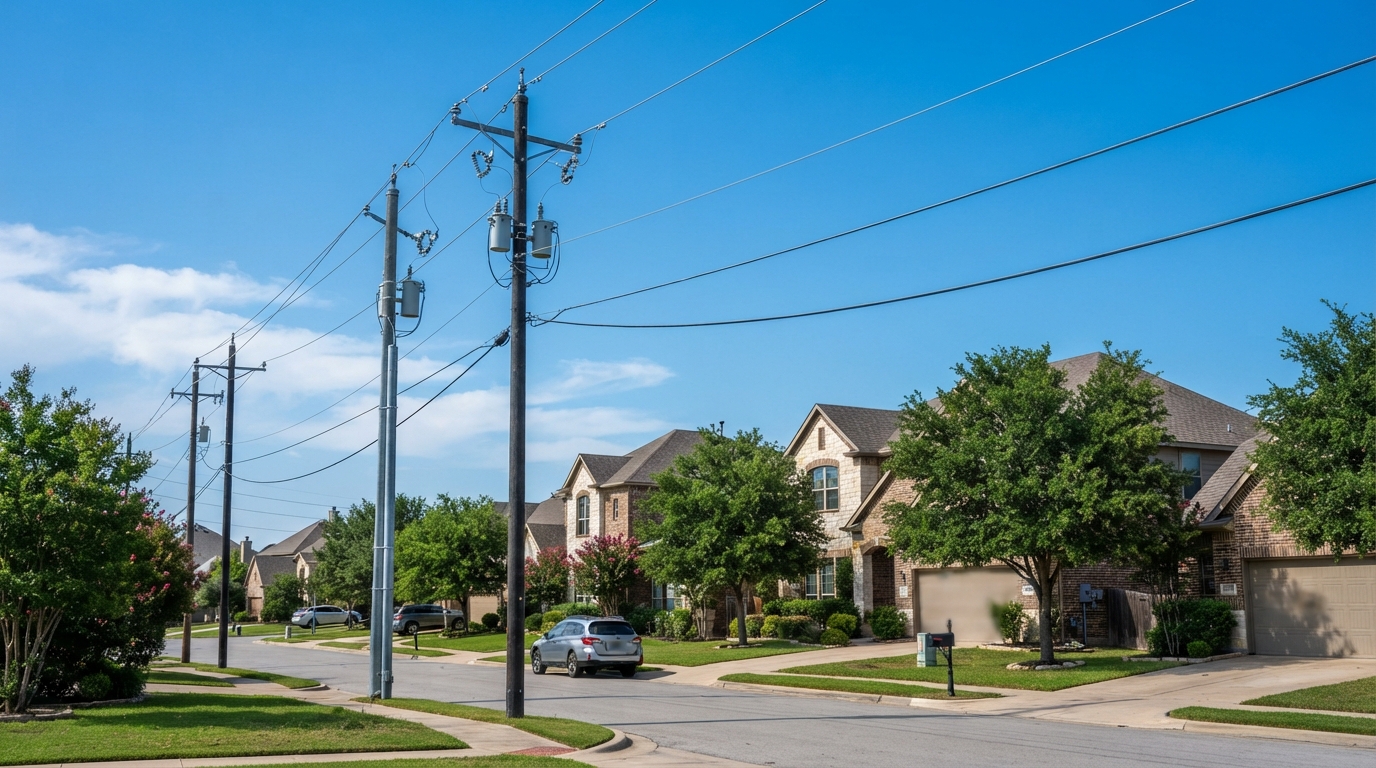
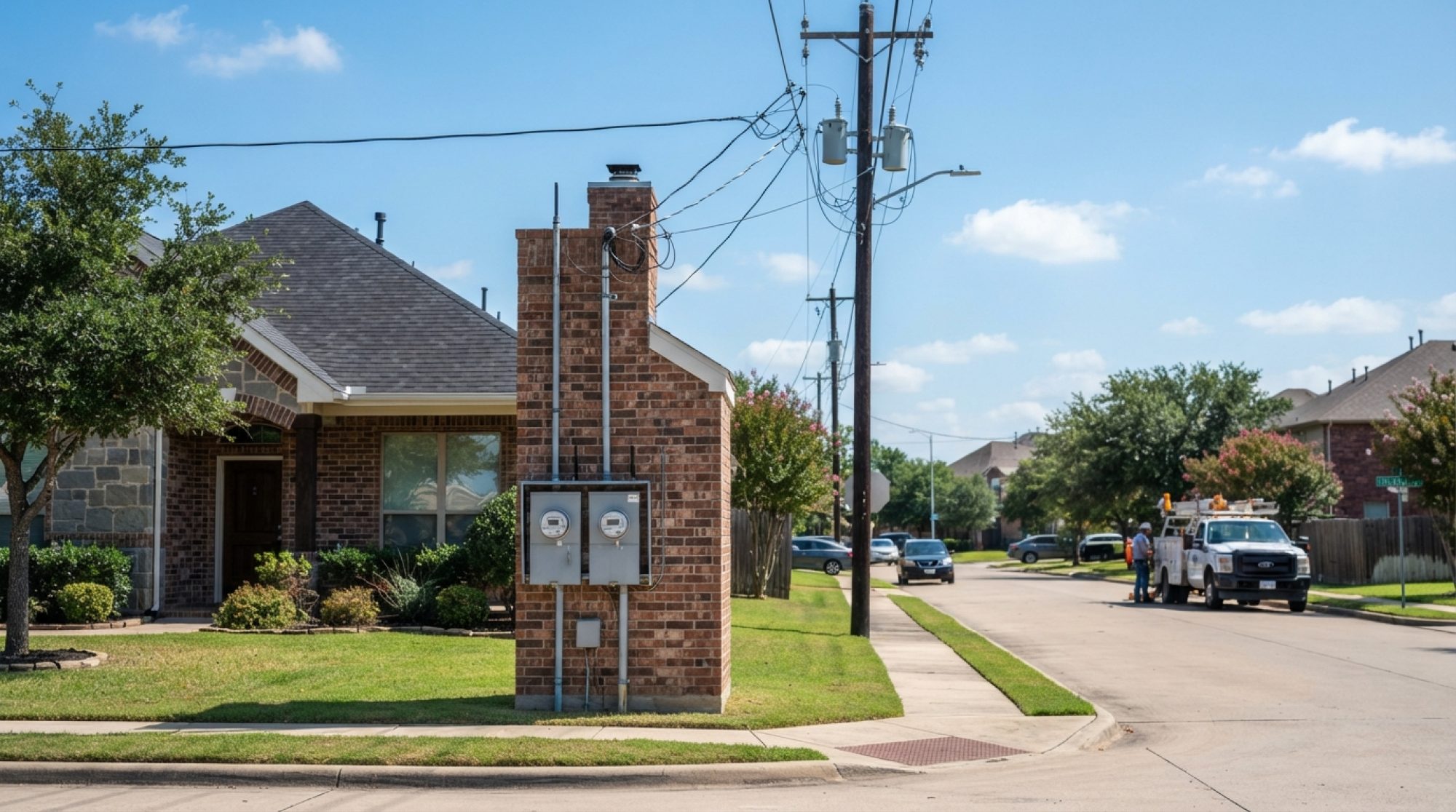
If you have ever stared at your monthly electricity bill and wondered why there are two separate entities involved in keeping your lights on, you are not alone. Many Texas residents find themselves confused when they see a company like ElectricityOne helping them navigate their options, a Retail Electric Provider (REP) managing their account, and a completely different utility truck driving down their street.
Understanding how the deregulated Texas energy market works starts with looking at your texas tdsp delivery charges explained. Here at ElectricityOne, we draw on over 20 years of experience providing reliable, quick, and courteous electric service for Texas homes and businesses to help you decode your monthly statement and master your energy choices.
Provider vs. Utility: Who Does What?
In the Lone Star State’s deregulated market, your electricity service is split between two distinct types of companies:
- Transmission and Distribution Service Providers (TDSPs / TDUs): These are the regulated utility companies that own and maintain the physical poles, wires, transformers, and smart meters. They do not sell you electricity; they simply deliver the power safely to your home or business.
- Retail Electric Providers (REPs): These are the competitive companies that you actually buy your electricity from. They purchase power from the grid, set your pricing plans, issue your monthly or daily bills, and handle customer service.
Whether you are shopping for electricity Houston, looking for electricity dallas, or browsing commercial options, you will always have a choice of REP, but your local TDSP is permanently assigned to your geographic location.
The Six Major Texas Utility Territories
The ERCOT grid is divided into specific service territories managed by six primary TDSPs. No matter which REP you choose, your delivery service will be provided by one of these regional utility companies:
- Oncor Electric Delivery: Serving North and West Texas, including Dallas-Fort Worth.
- CenterPoint Energy: Operating primarily in the greater Houston metropolitan area and surrounding coastal regions.
- AEP Texas (Central and North): Covering vast areas of West, South, and parts of North Texas.
- Texas-New Mexico Power (TNMP): Servicing various non-contiguous pockets across the state, including parts of the DFW metroplex, Gulf Coast, and West Texas.
- Lubbock Power & Light (LP&L): Having recently completed its transition into the competitive retail market, LP&L now serves customers within its historical footprint under the ERCOT umbrella.
When utility crews respond to power outages, downed lines, or meter issues, they are always representatives of your local TDSP, regardless of which REP manages your account balance.
How Prepaid Plans and TDSPs Work Together
A premier example of a trusted Texas REP is Payless Power, known for offering flexible, no-deposit options like their Payless Power prepaid plans. When you choose a flexible prepaid electric service such as their 6 Month – Prepaid or 12 Month – Prepaid options, Payless manages your daily account balance, sends usage updates, and keeps your power flowing seamlessly.
However, it is crucial to understand that even with prepaid plans, your local TDSP still delivers the actual power. The delivery fees and per-kilowatt-hour distribution charges set by the utility are seamlessly integrated into your daily or monthly accounting by your REP. These pass-through charges are regulated by the Public Utility Commission of Texas (PUCT) and apply universally to all consumers, ensuring the physical grid remains safe and modern.
Why Choose ElectricityOne?
Navigating the vast array of choices inspired by the historical power to choose initiative can feel overwhelming. That is why having an expert guide matters. ElectricityOne stands apart through:
- Over two decades of dedication to reliable, quick, and courteous electric service for Texas homes and business electricity plans.
- A meticulous provider selection process ensuring we only partner with top-tier REPs like Payless Power that offer genuine value.
- Full transparency regarding all costs, fees, and TDU pass-through charges so you never face unexpected surprises on your billing statements.
- Comprehensive coverage across all six major TDSP zones in Texas.
Conclusion
Understanding your TDSP and knowing the difference between your utility and your REP empowers you to take full control of your energy consumption. Whether you are managing a fixed-rate account or tracking a daily prepaid balance, recognizing how these charges appear on your statement makes you a more informed consumer. Ready to find the best energy plan for your specific utility delivery area? Call 1.844.567.2863 today to speak with our Texas energy experts.
Frequently Asked Questions
Can I choose which utility company delivers my electricity?
No. Your Transmission and Distribution Service Provider (TDSP) is determined strictly by your geographic location and physical address. You cannot change your utility company, but you can choose your Retail Electric Provider.
Why do TDSP fees appear on my bill if I didn’t use the utility directly?
TDSP charges cover the cost of maintaining the physical poles, wires, meters, and emergency response crews. These regulated pass-through fees are billed by your Retail Electric Provider on behalf of your local utility to ensure continuous infrastructure upkeep.
How do prepaid energy plans handle utility delivery charges?
With prepaid options, your daily account deductions account for both the energy consumed and the proportional daily utility delivery costs, ensuring that your account balance accurately reflects all services rendered.