
If you have ever lived in the Lone Star State, you have likely looked at your monthly power bill and wondered why there are multiple entities listed on a single statement. Texans frequently experience a moment of confusion when they lock in a low-cost rate for electricity Houston homes, only to see a completely different company name handling the physical distribution lines outside. Understanding how the deregulated Texas energy market operates requires looking past the marketing and recognizing the fundamental split between the company that generates your power and the utility that delivers it. Whether you are searching for electricity dallas options, evaluating business electricity plans, or even exploring prepaid electric service, knowing how these charges function is essential for every consumer.
At ElectricityOne, we bring over 20 years of experience providing reliable, quick, and courteous electric service for Texas homes and businesses. As a prominent platform connecting residents and businesses with the finest Retail Electric Providers in the state—like Frontier Utilities—we empower you to make informed decisions. Our meticulous provider selection process ensures we only partner with REPs that offer substantial cost savings, transparent disclosure of all costs and fees, and long-term satisfaction. To help you master your energy bill, let’s explore texas tdsp delivery charges explained so you never feel caught off guard by your monthly statement again.
Provider vs. Utility: Who Does What?
To truly understand your monthly bill, you must understand the difference between a Retail Electric Provider (REP) and a Transmission and Distribution Service Provider (TDSP, also frequently called a TDU). They operate in completely different spheres of the deregulated market.
The Retail Electric Provider (REP)
Your REP is the company you actively choose to buy your electricity from. They handle customer service, billing, and the creation of various pricing plans. A premier example of a trusted Texas REP is Frontier Utilities. When you partner with a provider like Frontier, they offer stability and predictability through innovative products like the Frontier Saver Premier 24 plan. This specific option secures your energy supply rate for a full 24 months, protecting you from market volatility.
The Transmission and Distribution Service Provider (TDSP)
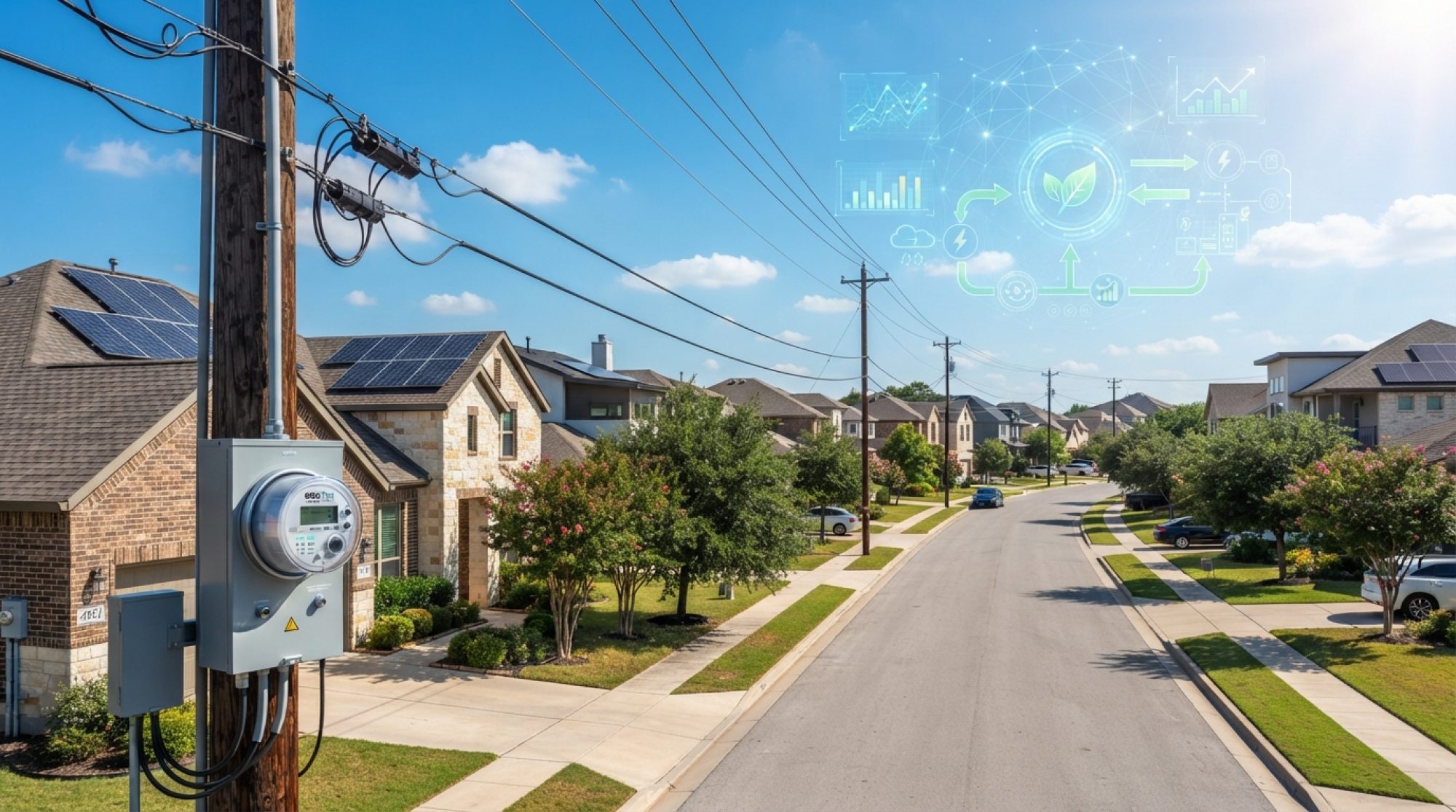
Your TDSP is the regulated utility company assigned to your specific geographical territory. You do not choose your TDSP; rather, it is dictated entirely by your physical address. The TDSP owns and maintains the physical infrastructure—the poles, wires, transformers, and smart meters that bring electricity straight to your door. When storms strike or lines go down, your local TDSP is the entity that rolls trucks to restore your power, regardless of which REP supplies your actual energy.
The Geography of the Texas Grid and Its Six Major Utilities
The ERCOT grid is divided into distinct service territories, each managed by a specific utility. Understanding your local TDSP is crucial because their regulated delivery charges are bundled into your monthly bill. No matter if you use the official power to choose tools or work directly with a trusted marketplace, your location determines your utility:
- Oncor Electric Delivery: Serving North and West Texas, including the Dallas-Fort Worth metroplex.
- CenterPoint Energy: Primarily powering the greater Houston metropolitan area and surrounding coastal regions.
- AEP Central & AEP North: Managing vast stretches of South and West Texas, including cities like Corpus Christi and Abilene.
- Texas-New Mexico Power (TNMP): Operating in various non-contiguous pockets across the state, from North Texas down to the Gulf Coast.
- Lubbock Power & Light (LP&L): The newly integrated utility territory that successfully transitioned into the competitive retail market.
Demystifying Pass-Through Fees
A common point of confusion for consumers revolves around why bills feature separate charges for energy supply and delivery. Because your chosen REP like Frontier Utilities cannot move electrons without the physical grid, the Public Utility Commission of Texas (PUCT) regulates and approves the pass-through charges assessed by the local TDSPs.
These delivery fees cover the cost of maintaining the poles and wires, reading your smart meter, and responding to outages. Whether you choose a short-term contract or lock in a stable, long-term plan like the Frontier Saver Premier 24, these regulated TDSP fees appear on your statement. They are passed directly through to the utility without markup by your REP.
Why Choose ElectricityOne?
- Over 20 years of trusted experience in the Texas energy market.
- Expert navigation across all six major TDSP zones (Oncor, CenterPoint, AEP, TNMP, and LP&L).
- Rigorous vetting of REPs to ensure absolute transparency and top-tier customer satisfaction.
- Simplified comparisons for residential and business electricity needs.
By understanding how your local TDSP works in tandem with your chosen retail provider, you can read your energy bill with complete confidence. Knowing who to call when the lights go out—and knowing that fixed-rate plans protect your energy supply costs—puts you firmly in control of your household or business budget.
Ready to find the best energy plan for your specific utility delivery area? Call 1.844.567.2863 today to speak with our Texas energy experts.
Frequently Asked Questions
Can I choose a different TDSP to lower my delivery fees?
No. TDSP service territories are strictly defined by your physical geographical location. You can choose your Retail Electric Provider, but your local utility is automatically assigned based on where your home or business is built.
Are TDSP delivery charges included in fixed-rate plans?
Yes and no. While a fixed-rate plan from a provider like Frontier Utilities secures your energy supply generation rate, your bill will still list the regulated TDSP delivery charges as a pass-through cost, as mandated by the PUCT.
Who should I call if my power goes out?
If you experience a blackout, downed power line, or equipment failure, you should contact your local TDSP (such as Oncor or CenterPoint) directly, rather than your Retail Electric Provider, as they dispatch the crews to fix physical infrastructure issues.