
If you have ever stared at your monthly electricity bill in Texas and wondered why two entirely different company names appear on the page, you are certainly not alone. Many Texas residents sign up for a competitive contract through a trusted platform like ElectricityOne, only to spot a completely different crew—such as an Oncor or CenterPoint truck—fixing local lines after a severe thunderstorm. This division of labor confuses countless consumers, making texas tdsp delivery charges explained a top priority for anyone looking to master their monthly energy expenses. Understanding how your retail provider and your local utility work together is essential for smart budgeting.
Provider vs. Utility: The Two Halves of Your Texas Power Bill
To truly understand how electricity flows to your home, you must distinguish between the company that sells you energy and the company that maintains the physical grid. In the deregulated Texas market, your power comes courtesy of a unique partnership between a Retail Electric Provider (REP) and a Transmission and Distribution Service Provider (TDSP, also known as a TDU).
Your chosen REP, such as APG&E, handles the commercial side of your energy consumption. They buy power from the generation market, manage your billing statements, provide customer service, and establish your contract terms. When you secure a predictable energy rate using the SimpleSaver 12 plan, APG&E locks in your supply structure for a full year. However, they do not own the physical metal poles, the wooden utility lines, or the digital smart meter attached to your house.
The Role of the Transmission and Distribution Service Provider
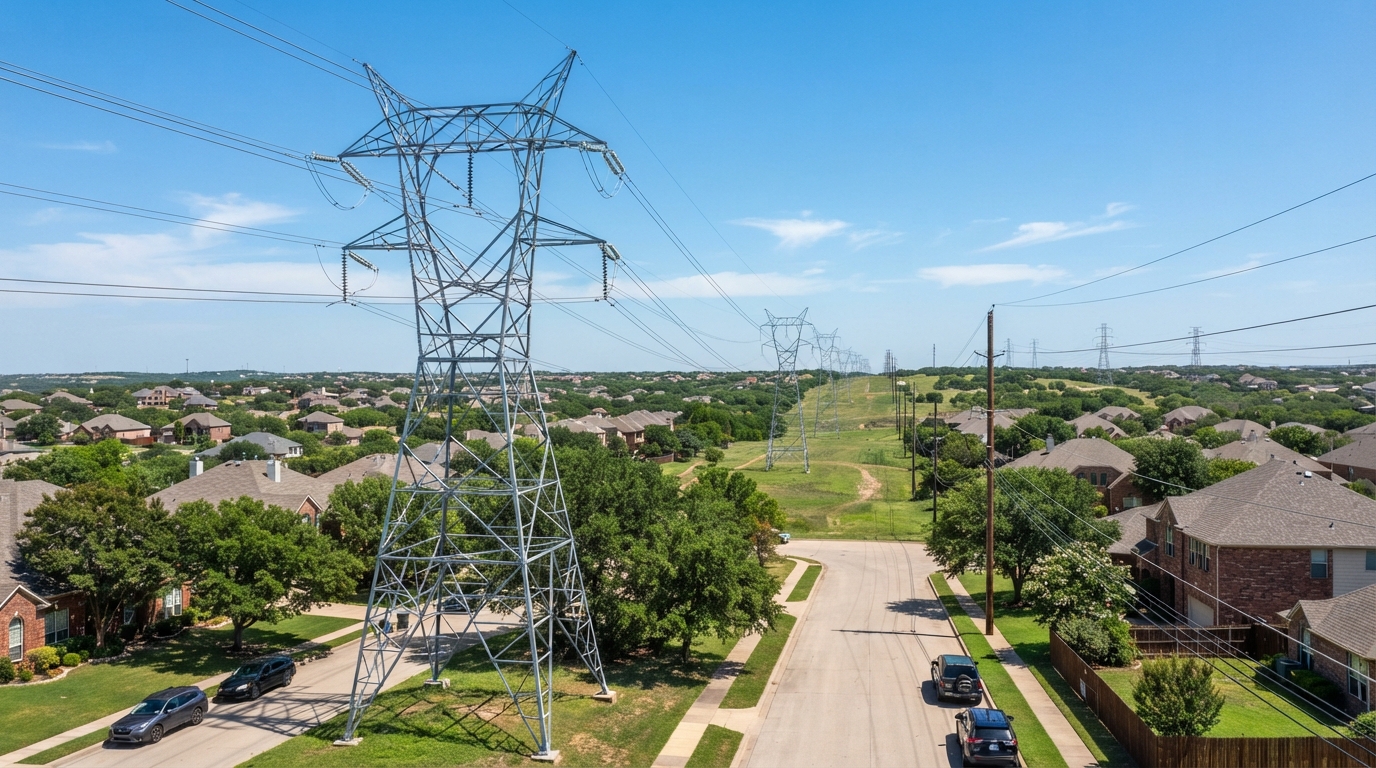
Your local TDSP is the regulated monopoly responsible for the physical infrastructure. Whether you need electricity Houston, electricity dallas, or commercial business electricity plans, your regional utility is the entity that safely delivers the electrons to your door, maintains the grid, and restores power during outages. TDSP delivery charges are regulated strictly by the Public Utility Commission of Texas (PUCT). These pass-through fees cover the cost of maintaining the poles and wires, and they appear on every residential bill regardless of whether your plan utilizes traditional fixed pricing, tiered usage bill credits, or even prepaid electric service alternatives.
The Geography of the Texas Grid: The Six Major Utility Zones
The ERCOT grid is divided into distinct service territories, each managed by a specific TDSP. Knowing your local utility helps you navigate the power to choose market effectively:
- Oncor Electric Delivery: Serving North and West Texas, including Dallas-Fort Worth.
- CenterPoint Energy: Powering the Greater Houston metropolitan area and surrounding Gulf Coast.
- AEP Texas (Central & North): Covering vast expanses of South and West Texas, stretching toward the Panhandle.
- Texas-New Mexico Power (TNMP): Operating in localized pockets across various parts of the state.
- Lubbock Power & Light (LP&L): The newly integrated municipal utility that fully transitioned into the competitive ERCOT market.
Why Choose ElectricityOne?
Navigating the complex landscape of Texas energy providers and utility fees can feel overwhelming. That is why savvy consumers turn to ElectricityOne. Backed by over 20 years of experience providing reliable, quick, and courteous electric service for Texas homes and businesses, ElectricityOne acts as your premier guide to the market:
- We connect residents and businesses with the finest REPs in the state—such as APG&E.
- Our meticulous provider selection process ensures partnerships only with REPs that offer substantial cost savings.
- We champion transparent disclosure of all costs and fees, including mandatory TDU pass-through charges.
- We simplify shopping for top-tier providers across all six major TDSP zones.
Conclusion
Understanding how your TDSP delivery charges interact with your chosen retail plan gives you total transparency over your monthly energy expenses. While your REP manages your contract and supply rate, your local utility keeps the physical grid running smoothly. Ready to find the best energy plan for your specific utility delivery area? Call 1.844.567.2863 today to speak with our Texas energy experts.
Frequently Asked Questions
Can I choose which TDSP delivers my electricity?
No. TDSPs operate as regulated regional monopolies. Your local utility is determined entirely by your physical geographic address, meaning you cannot switch your TDSP like you can switch your Retail Electric Provider.
Why do TDSP delivery charges change on my bill if I have a fixed-rate plan?
While your APG&E energy supply rate remains locked for the duration of your contract, TDSP delivery fees are periodically adjusted and approved by the PUCT to cover infrastructure maintenance and storm recovery costs. These regulated pass-through fees are passed directly to you without markup by your REP.
Who should I call if my power goes out?
You should always contact your local TDSP (such as Oncor or CenterPoint) directly during a power outage or downed power line emergency, as they own and operate the physical lines responsible for restoring your service.