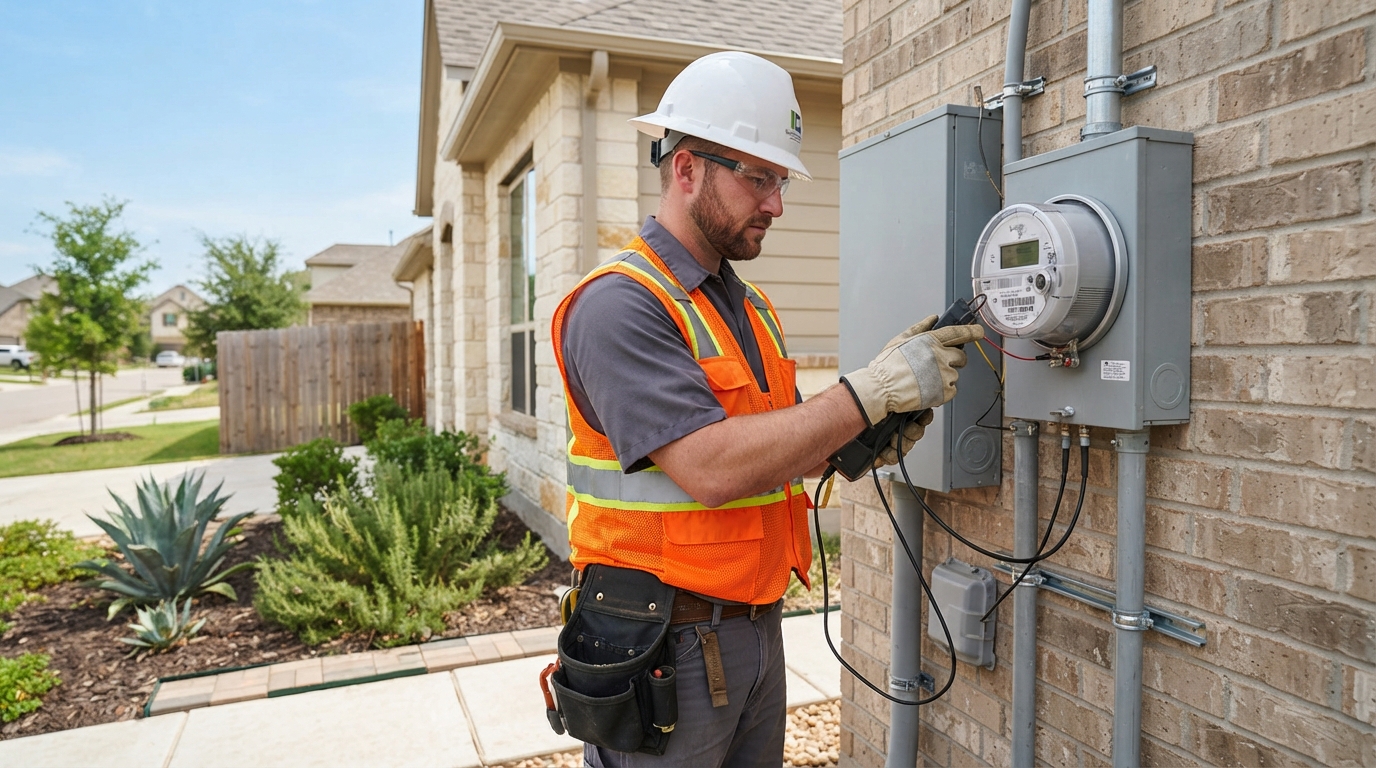
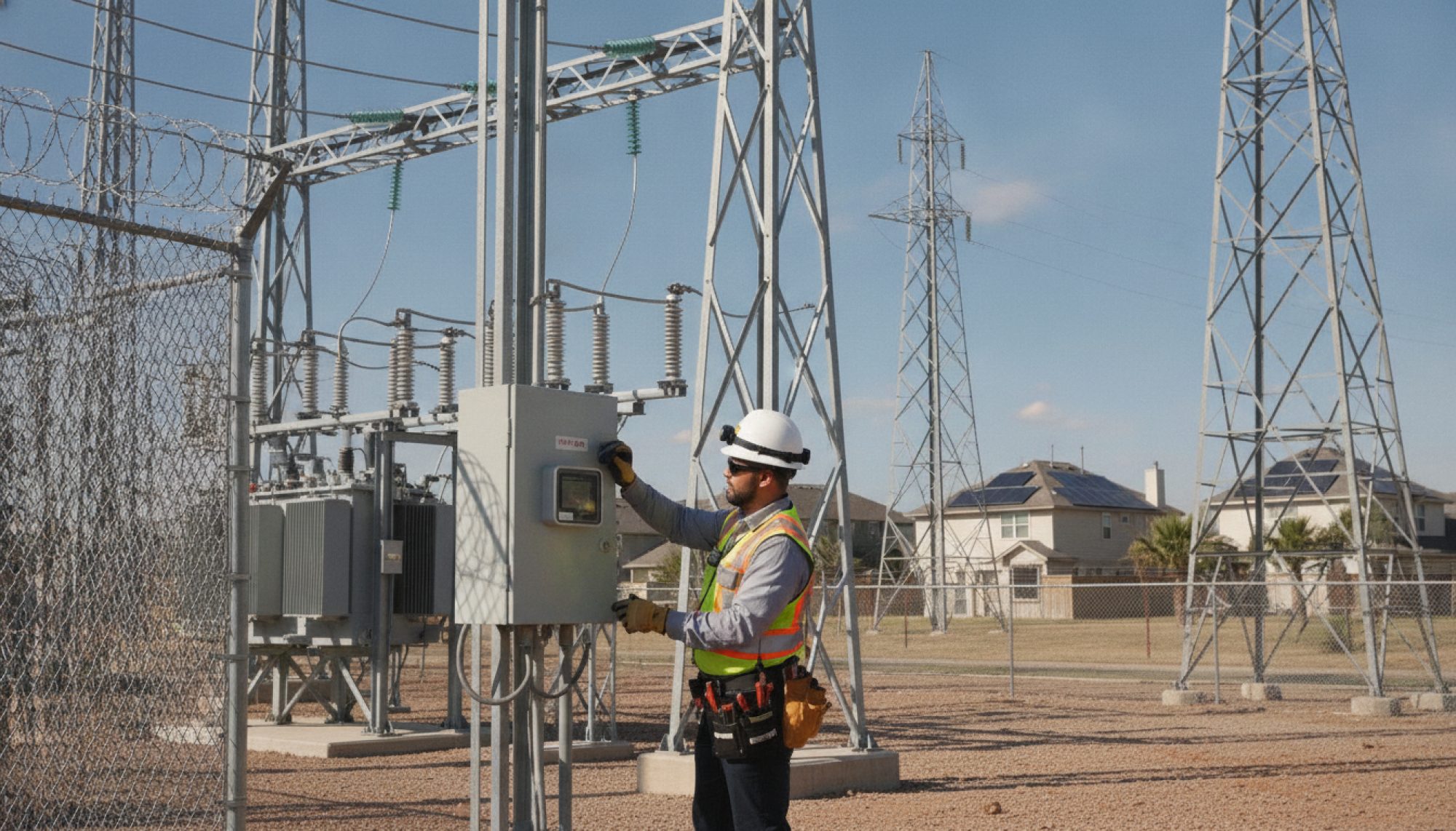
Imagine you just signed up for a competitive 12-month energy contract with APG&E, but during a heavy summer storm, you spot an Oncor or CenterPoint bucket truck repairing downed lines in your neighborhood. If you pay your monthly bill to APG&E, why is a different company working on the physical wires? This is one of the most common sources of confusion for Texas electricity customers. To navigate the Lone Star State’s energy market successfully, you must first understand what is a transmission and distribution service provider (TDSP) and how its geographic boundaries shape your monthly energy experience.
The Clear Distinction: Retail Provider vs. Utility
In the deregulated ERCOT grid, your electricity service is split into two distinct roles: supply and delivery. Your Retail Electric Provider (REP) is the company you choose to buy your electricity from. A premier example of a reputable Texas REP is APG&E, known for its focus on structured bill predictability. When you enroll in their popular SimpleSaver 12 plan, APG&E establishes your fixed energy plan terms and supply structure for 12 months. This protects you from wholesale market volatility and ensures a stable cost per kilowatt-hour.
However, APG&E does not own the physical power lines, poles, or meters. That is the job of your Transmission and Distribution Service Provider (also known as a TDU or utility). Your local TDSP remains the entity responsible for physically routing that electricity to your home meter, repairing infrastructure after storms, and reading your smart meter. No matter which REP you choose for your billing, your TDSP is determined strictly by your physical location.
The Geography of the Grid: The Six Major Texas Utilities
Texas is divided into specific utility service territories. While you have the freedom to choose your REP, you cannot choose your TDSP. Here is how the six major Texas utility companies divide the state:
Oncor Electric Delivery
As the largest TDSP in Texas, Oncor maintains over 140,000 miles of transmission and distribution lines. They service millions of customers across North, West, and Central Texas. If you are shopping for electricity dallas, Oncor is the utility company responsible for keeping your lights on.
CenterPoint Energy
CenterPoint manages the grid infrastructure for the highly populated Houston metropolitan area and parts of southern Texas. Residents looking for electricity Houston will have CenterPoint listed as their utility, meaning CenterPoint crews will respond to local physical grid emergencies.
AEP Texas Central & AEP Texas North
American Electric Power (AEP) operates two distinct divisions in Texas. AEP Texas Central covers southern coastal regions, including Corpus Christi, Laredo, and the Rio Grande Valley. AEP Texas North covers northern and western communities, such as Abilene and San Angelo.
Texas New-Mexico Power (TNMP)
TNMP services various pockets of Texas that are not covered by the larger utilities. Their service areas span from the Gulf Coast region near Galveston to parts of North-Central Texas and West Texas near Pecos.
Lubbock Power & Light (LP&L)
In a historic move, Lubbock Power & Light transitioned into the competitive ERCOT market. This transition allows Lubbock residents to move away from a single municipal utility and choose their own REP, with LP&L continuing to maintain the physical infrastructure as the area’s designated TDSP.
How ElectricityOne Simplifies Your Shopping Experience
Navigating different utility territories, pass-through fees, and REP contracts can feel overwhelming. That is where ElectricityOne steps in as your trusted partner. As a prominent platform connecting residents and businesses with the finest REPs in the state—like APG&E—we educate you on the role of your local utility while finding you the best rates.
Here is why Texans trust ElectricityOne:
- Over 20 years of experience providing reliable, quick, and courteous electric service for Texas homes and businesses.
- A meticulous provider selection process ensuring partnerships only with REPs that offer substantial cost savings, transparent disclosure of all costs and fees, and long-term satisfaction.
- Expert guidance for commercial clients looking to secure customized business electricity plans to keep operations running smoothly.
- Flexible options for residential customers, including standard fixed contracts and structured prepaid electric service.
- A reliable alternative to the state-run power to choose website, filtering out plans with deceptive tier structures or hidden charges.
Understanding Pass-Through Fees and Outages
Because TDSPs own and maintain the physical grid, they charge fees for their services. These are known as TDU delivery charges or pass-through fees. These charges are heavily regulated by the Public Utility Commission of Texas (PUCT) and are updated twice a year. Regardless of whether you choose a fixed-rate option like the SimpleSaver 12 plan from APG&E or a variable plan, these delivery fees are passed directly to your bill without any markup from your REP.
Furthermore, knowing your TDSP is critical during an emergency. If your neighborhood experiences a power outage or you spot a downed power line, do not call APG&E. Your REP cannot dispatch crews to fix physical wires. Instead, you must contact your local TDSP (Oncor, CenterPoint, TNMP, AEP, or LP&L) directly, as they are the only ones authorized to handle grid repairs.
Ready to find the best energy plan for your specific utility delivery area? Call 1.844.567.2863 today to speak with our Texas energy experts.
Frequently Asked Questions
Can I choose a different TDSP if I do not like their delivery charges?
No. TDSPs are regulated monopolies tied to specific geographic boundaries. You cannot choose or change your TDSP; however, you have complete freedom to choose your Retail Electric Provider (REP) to secure competitive supply rates.
Do TDSP delivery charges change during my 12-month fixed contract?
Yes. While your energy supply rate remains locked in with a plan like APG&E’s SimpleSaver 12, TDSP pass-through charges are subject to change twice a year (typically in March and September) based on approvals by the Public Utility Commission of Texas.
Where can I find the contact information for my TDSP during an outage?
Your TDSP’s emergency contact number is always printed on your monthly electricity bill. You can also visit the official website of your specific utility (such as Oncor or CenterPoint) to view real-time outage maps and report localized grid issues.