
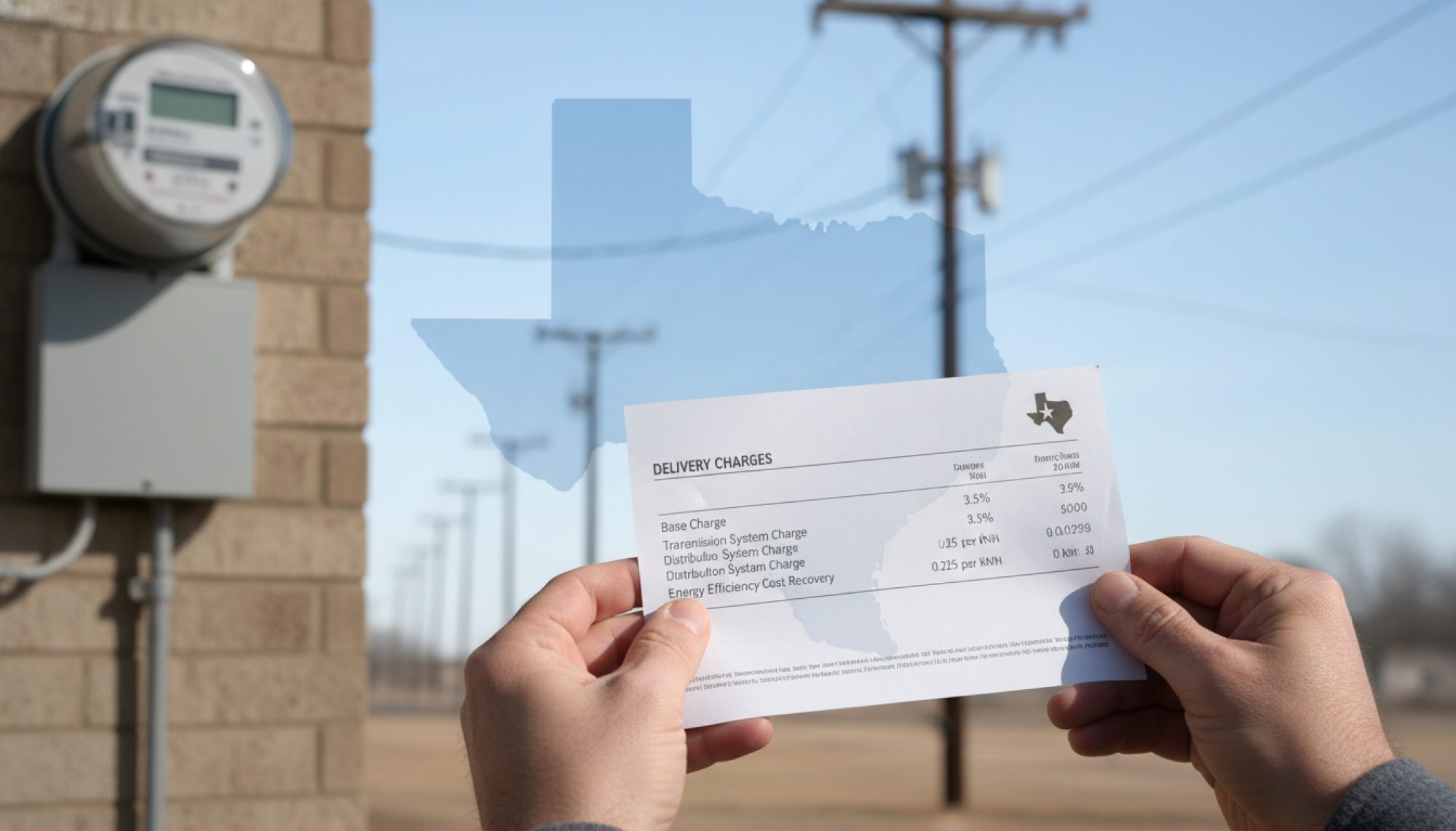
Unpacking Your Texas Electric Bill: Why TDSP Delivery Charges Change Twice a Year
Ever stared at your Texas electric bill, scratching your head over the ‘delivery charges’ section? You’re not alone. Many Texans find themselves confused by these seemingly fluctuating fees, often wondering why their energy costs aren’t just a simple cents-per-kilowatt-hour rate. While your Retail Electric Provider (REP) determines the price you pay for the actual electricity you consume, there’s another crucial player behind the scenes: your Transmission and Distribution Service Provider (TDSP). These essential entities are responsible for getting that electricity from power plants to your home, and their charges are a mandatory part of every Texan’s bill. Understanding these charges, and why they adjust twice a year, is key to truly comprehending your overall energy expenses.
Understanding Your TDSP: The Grid’s Backbone
Think of your TDSP as the landlord of the poles, wires, and meters that make up Texas’s vast electricity grid. Companies like Oncor, CenterPoint Energy, AEP Texas, and Texas-New Mexico Power (TNMP) are the primary TDSPs in different regions across the state. They don’t sell you electricity; instead, they maintain the infrastructure, respond to outages, and ensure the reliable delivery of power to your property. This critical work requires significant investment and ongoing operational costs, which are recovered through the delivery charges you see on your monthly statement.
Decoding Delivery Charges on Your Bill
Your electric bill is typically divided into two main components: the energy charges from your REP and the delivery charges from your TDSP. While your REP’s energy rate might be fixed for the term of your contract, the TDSP delivery charges are not. These charges are regulated by the Public Utility Commission of Texas (PUC) and are passed directly through to consumers without markup from your REP. They cover everything from the cost of maintaining power lines and substations to the expenses associated with reading your meter and restoring power after a storm. Essentially, they are the ‘rent’ for using the grid’s infrastructure.
Why TDSP Delivery Charges Change Twice a Year
The twice-yearly adjustment of TDSP delivery charges is a common point of confusion. These changes typically occur in March and September. The reason for these adjustments lies in the regulatory process. TDSPs are allowed to recover their operating costs and investments in infrastructure through these charges. The PUC conducts regular reviews to ensure these charges are fair and necessary. These reviews account for changes in the cost of doing business, new investments in grid improvements (like smart meter technology or resilience upgrades), and even fluctuations in the cost of capital.
For instance, if a TDSP invests heavily in upgrading its transmission lines to improve reliability or expand capacity for a growing population, those approved costs will eventually be reflected in the delivery charges. Similarly, if there are changes in the regional energy market or operational expenses, these can also influence the adjustments. These biannual reviews ensure that TDSPs have the necessary funds to maintain a safe and reliable grid, while also protecting consumers from unwarranted increases. While your fixed-rate plan from a provider found on a platform like ElectricityOne protects you from volatility in the energy supply rate, these delivery fees are a separate, regulated component that all Texans pay, regardless of their chosen REP or plan.
ElectricityOne: Your Partner in Transparent Energy Choices
At ElectricityOne, with over 20 years of experience providing reliable electric service for Texas homes and businesses, we understand the complexities of the Texas energy market. We serve as a prominent power-to-choose platform, dedicated to connecting Texans with the finest Retail Electric Providers (REPs). Our meticulous selection process ensures partnerships only with providers that offer substantial cost savings, transparent disclosure of all costs and fees – including a clear breakdown of TDSP charges – and a commitment to long-term contentment. We believe that understanding all components of your bill empowers you to make smarter energy choices. When you compare Texas electricity rates on our platform, you’ll find plans that clearly outline both the energy rate and how TDSP charges will appear.
Conclusion: Clarity in Your Energy Costs
Navigating your Texas electric bill doesn’t have to be a mystery. By understanding the vital role of your TDSP and why their delivery charges fluctuate, you gain a clearer picture of your total energy expenses. While these charges are a constant for all Texans, choosing the right Retail Electric Provider can significantly impact your overall budget. ElectricityOne, backed by two decades of experience, is committed to guiding you through this landscape, ensuring you partner with REPs that prioritize transparency and value. We make it easy to find providers who clearly communicate all costs, allowing you to focus on enjoying reliable electricity without hidden surprises. Ready to find a reliable energy provider? Call 1.844.567.2863 today to speak with our residential energy experts.
What do TDSP delivery charges cover?
TDSP delivery charges cover the costs associated with maintaining and operating the electricity transmission and distribution infrastructure, including poles, wires, substations, and meters. They also cover expenses for meter reading, power restoration, and general grid maintenance.
Why do TDSP delivery charges change twice a year?
TDSP delivery charges are regulated by the Public Utility Commission of Texas (PUC) and are adjusted typically in March and September. These adjustments reflect changes in the TDSP’s approved operational costs, investments in infrastructure upgrades, and other regulatory factors, ensuring they can maintain a safe and reliable grid.
Does my Retail Electric Provider (REP) control the TDSP delivery charges?
No, your Retail Electric Provider (REP) does not control or set the TDSP delivery charges. These charges are determined by your local TDSP and approved by the PUC. Your REP simply passes these charges through to you on your bill without any markup.