
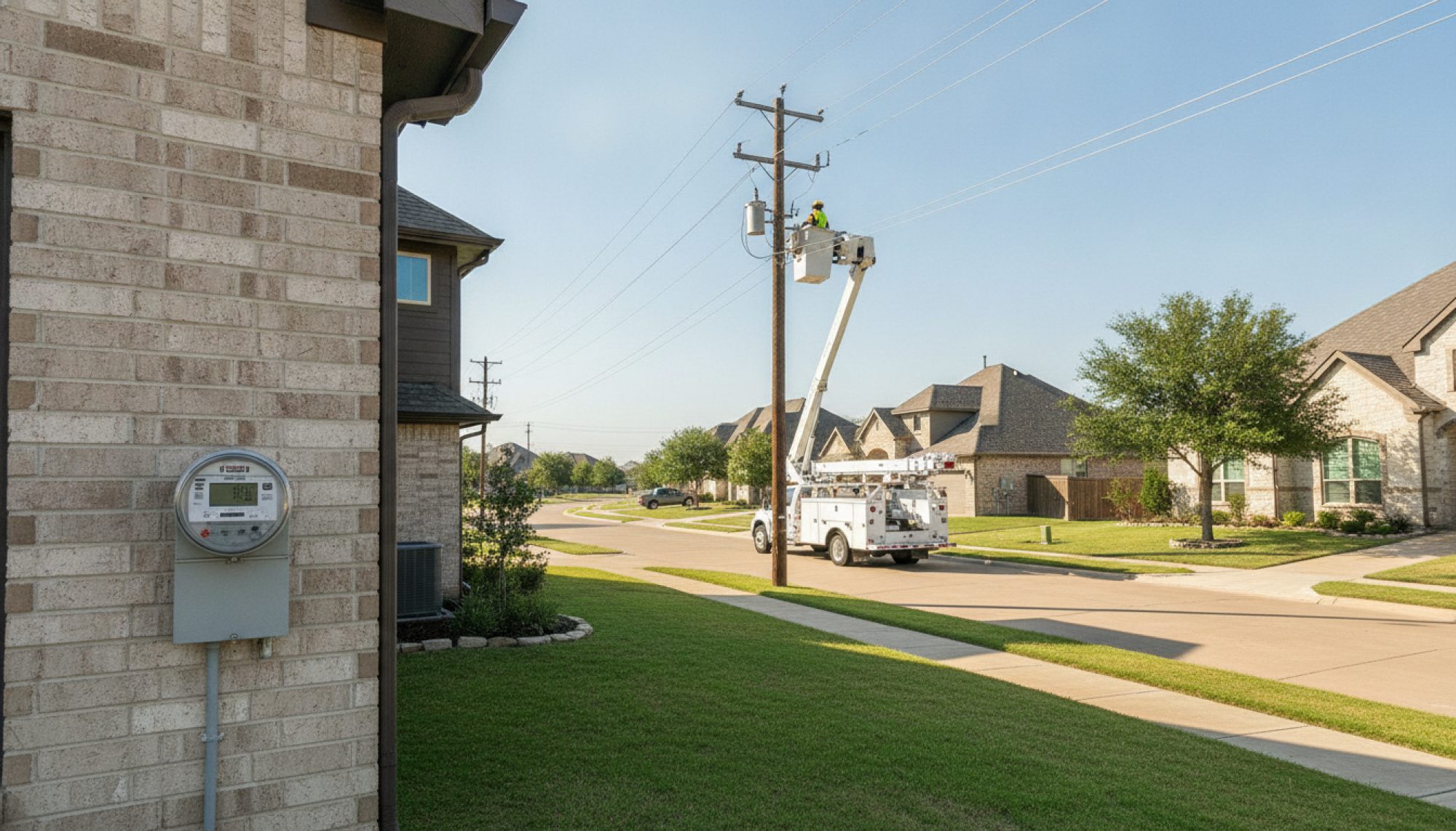
Imagine you just signed up for a great fixed-rate energy plan with Frontier Utilities. You feel secure knowing your supply rate is locked in for the long haul. But then, a few weeks later, you see a utility truck labeled Oncor or CenterPoint working on the power lines down your street. Or perhaps you open your monthly statement and see charges labeled “TDU Delivery Charges” alongside your supply charges. This common scenario leaves many Texans scratching their heads. Why are there two different companies involved in keeping your lights on?
To navigate the unique Texas energy market successfully, it is essential to understand the distinct roles played by your Retail Electric Provider (REP) and your local utility company. Let’s clear up the confusion and look at how these entities work together to power your home.
The Core Difference: Retailer vs. Infrastructure
In the deregulated areas of Texas, the energy market is split into two main functions: selling electricity and delivering electricity. This is where many consumers get confused about who does what.
Your Retail Electric Provider (REP), such as Frontier Utilities, is the company you choose to buy your electricity from. They purchase power from wholesale generators, design various energy plans, manage your account, and send your monthly bill. When you shop for a plan with a secured base supply charges rate, you are contracting directly with your chosen REP.
On the other side of the coin is your utility. To understand how the physical power actually reaches your home, you must ask: what is a transmission and distribution service provider? Often abbreviated as TDSP or TDU, this is the utility company that owns, maintains, and operates the physical infrastructure—the poles, wires, transformers, and smart meters. Regardless of which REP you choose to handle your billing, your local TDSP remains the same based on your physical geographic location.
The Six Major Texas TDSPs and Their Territories
The Texas power grid, managed by ERCOT, is divided into specific geographic service territories. Each territory is managed by one of six major regulated utility companies:
- Oncor: The largest TDSP in Texas, serving Dallas-Fort Worth, Waco, Wichita Falls, and parts of West Texas.
- CenterPoint Energy: Serves the highly populated Houston metropolitan area and surrounding gulf coast communities.
- AEP Texas Central: Covers major southern cities like Corpus Christi, McAllen, and Laredo.
- AEP Texas North: Services northern and western areas, including Abilene and San Angelo.
- Texas New-Mexico Power (TNMP): Operates in various pockets across the state, including portions of the Gulf Coast, North Texas, and West Texas.
- Lubbock Power & Light (LP&L): The newest utility to transition into the competitive ERCOT market, bringing choice to the Lubbock area.
No matter which of these six territories your home sits in, premier providers like Frontier Utilities service them all. For instance, if you enroll in the popular Frontier Saver Premier 24 plan, Frontier secures your energy supply rate for a full 24 months. However, your local TDSP is still the entity delivering that power across the local lines and reading your smart meter each month.
Why TDSP Charges Appear on Your Bill
Because the TDSP owns and maintains the grid infrastructure, they must be compensated for their services. These charges, known as TDU delivery charges or pass-through fees, are heavily regulated by the Public Utility Commission of Texas (PUCT).
These delivery fees include a fixed monthly utility fee and a cost per kilowatt hour charge. Your REP simply passes these regulated distribution charges directly through to your bill without any markup. This explains why, even with a stable, long-term fixed-rate plan from Frontier Utilities, your total monthly bill may fluctuate slightly as your overall energy usage changes the total delivery charges calculated by your utility.
How ElectricityOne Simplifies Your Energy Search
Navigating the relationship between utilities and retail providers can feel overwhelming, but you do not have to do it alone. ElectricityOne serves as a trusted bridge, connecting Texas residents with top-tier plans tailored to their specific utility zones.
With a commitment to transparency and customer satisfaction, ElectricityOne stands out in the Texas market by offering:
- Over 20 years of experience providing reliable, quick, and courteous electric service for Texas homes and businesses.
- A meticulous provider selection process ensuring partnerships only with REPs that offer substantial cost savings and long-term satisfaction.
- Completely transparent disclosure of all costs and fees, including TDU pass-through charges, so you never face unexpected billing surprises.
- An easy way to compare top-rated plans like those from Frontier Utilities across all major utility delivery areas.
Knowing Who to Call: Bill Questions vs. Emergencies
Understanding the distinction between your REP and your TDSP is also crucial when issues arise. If you have questions about your payment, want to renew your contract, or need to update your billing address, you should contact Frontier Utilities.
However, if your electricity goes out, if you see a downed power line, or if there is a physical emergency with your meter, you must contact your local TDSP directly. Because the utility company owns the physical lines, your REP cannot dispatch crews to restore power during an outage.
Ready to find the best energy plan for your specific utility delivery area? Call 1.844.567.2863 today to speak with our Texas energy experts.
Frequently Asked Questions
What is the difference between a REP and a TDSP?
A Retail Electric Provider (REP) sells you electricity, manages your account, and handles your billing. A Transmission and Distribution Service Provider (TDSP) is the utility company that owns and maintains the physical poles, wires, and meters that deliver electricity to your property.
Can I choose my own utility company (TDSP) in Texas?
No. While you can freely choose your Retail Electric Provider, your utility company is determined solely by the physical location of your home or business. Each geographic region in the deregulated Texas market is serviced by one specific TDSP.
Do TDSP delivery charges change on a fixed-rate plan?
Yes. While a fixed-rate plan secures your retail energy supply rate, TDSP delivery charges are regulated by the PUCT and can be adjusted twice a year. These charges are passed through directly on your bill and will vary based on how much electricity you consume each month.